Guide
Botox softens the jaw. It doesn't stop the clenching
Injections weaken the muscle that closes your jaw, so it pulls less hard and looks slimmer. The habit driving it carries on underneath — you just can't see it any more. Here's what before-and-after photos can't show you, and how to find out what your jaw is actually doing.
As Seen In





What the mirror can't tell you
The jawline is the symptom. The clenching is the thing.
A before-and-after photo shows you a narrower face. It can't show you whether your jaw stopped working at night, because nothing in that process ever measured it.
What Botox actually does
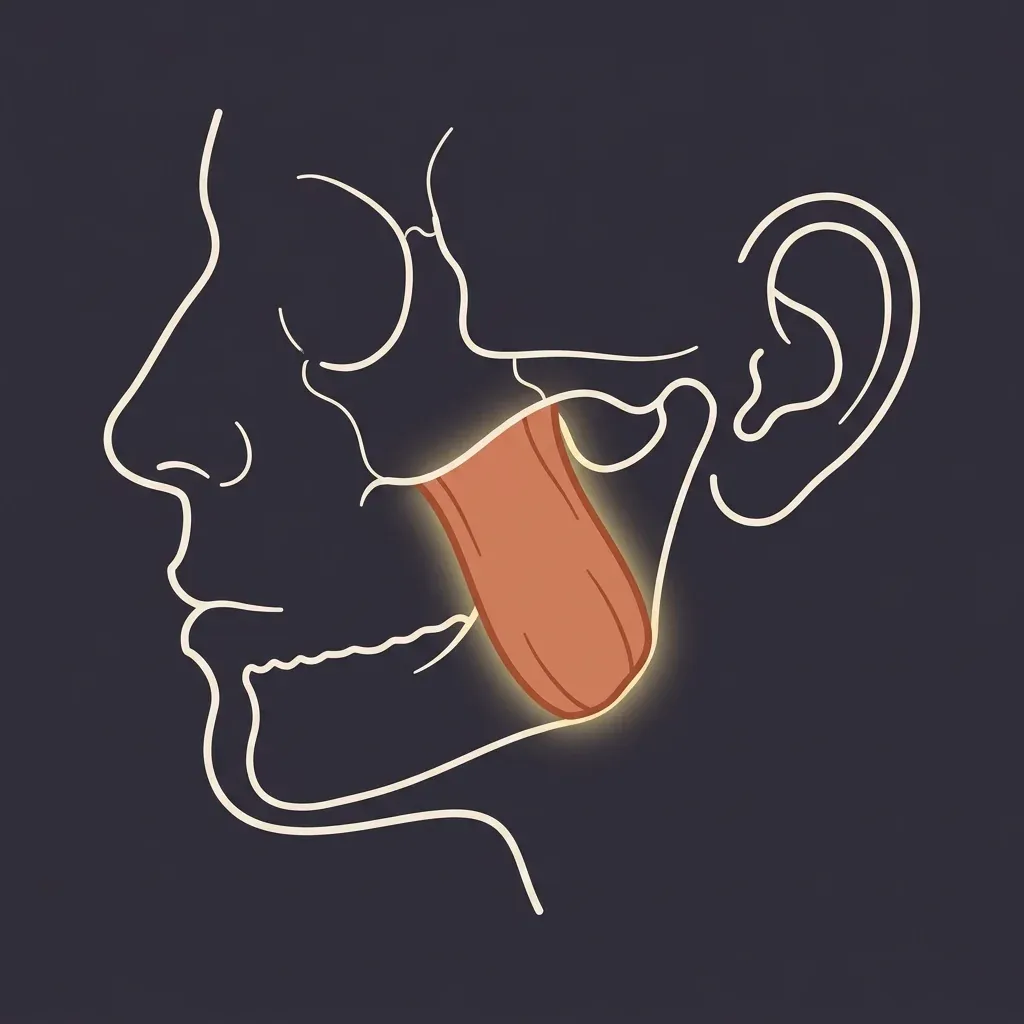
Injected into the masseter, botulinum toxin stops the muscle contracting at full strength. Less force means less wear on the teeth, often less muscle ache, and a slimmer lower face as the muscle loses bulk. That is a real effect and for some people a welcome one.
It works at the muscle, not at the signal reaching it.
What it leaves untouched
The instruction to clench comes from the brain, and the injection doesn't reach it. The jaw goes on doing what it did — the muscle carrying it out is simply weaker. This also makes the behaviour harder to see: episode counts are read off a threshold in the muscle signal, so a weaker muscle can produce a lower count while the jaw is doing exactly as much. The effect then wears off on the muscle's timetable rather than the habit's — reviews put the peak at five to eight weeks and the duration at up to roughly six months.
Nothing about the pattern was changed, so nothing about it persists.
Why the muscle grew in the first place
Masseter hypertrophy is a worked muscle. Hours of clenching build it the way any repeated load builds a muscle, and a wider lower face is the visible result. Removing the bulk without changing the load is why repeat sessions are the norm rather than the exception.
The muscle shrinks, the clenching stays — and once the Botox wears off, the clenching trains the muscle right back up.
The part nobody measures
Through all of this — the consultation, the injection, the photos, the next session — the clenching itself is never measured. You find out how the face looks, not whether the jaw calmed down. Two measured nights turn that into a number you can compare against later.
You can't tell whether something worked if you never measured it.
We measure jaw muscle activity. We don't inject anything, and whether Botox is right for you is a conversation with the practitioner who would be doing it.
Where we stop
We measure the clenching; we don't treat it with injections. Where the line is:
- We don't provide, recommend against, or advise on botulinum toxin. That decision sits with you and a qualified practitioner.
- We measure jaw muscle activity and report what we measured. That is not a diagnosis and it is not medical advice.
- If you have jaw pain, that is a conversation with a dentist or doctor — pain is a clinical question and we are a wellness company.
- Everything on this page about Botox is drawn from published reviews, named at the bottom, with their limits stated.
A measurement is useful before an intervention and after one. It is not a substitute for either.
The Jaw Behaviour Quiz
Two minutes to a clearer picture of what your jaw is doing.
Fourteen questions about your days, your nights and what you put into them — and a read on where yours points. A starting point, not a diagnosis.






14 questions · about 2 minutes · free, no account needed
Do you wake up with a tired, stiff or sore jaw?
- Most mornings
- Sometimes
- Rarely or never
Get my result
Backed by






Frequently Asked Questions
Does masseter Botox stop teeth grinding?
Why is my jaw getting wider?
Will my face slim down again if I stop?
Is masseter Botox safe?
Can I do both?

Related guides
The JawSense app
Find out what your jaw actually does at night
Two nights with a sensor in your own bed, and you have a number to compare against — before the next session, or instead of it.


 Scan to get the app
Free · iOS & Android · works without the device
Or start with the 2-minute jaw quiz
“The check-ins made me realise I was clenching all day at work. Now I catch myself and let go of it. My awareness has completely changed.”