Guide
How to release a tight jaw
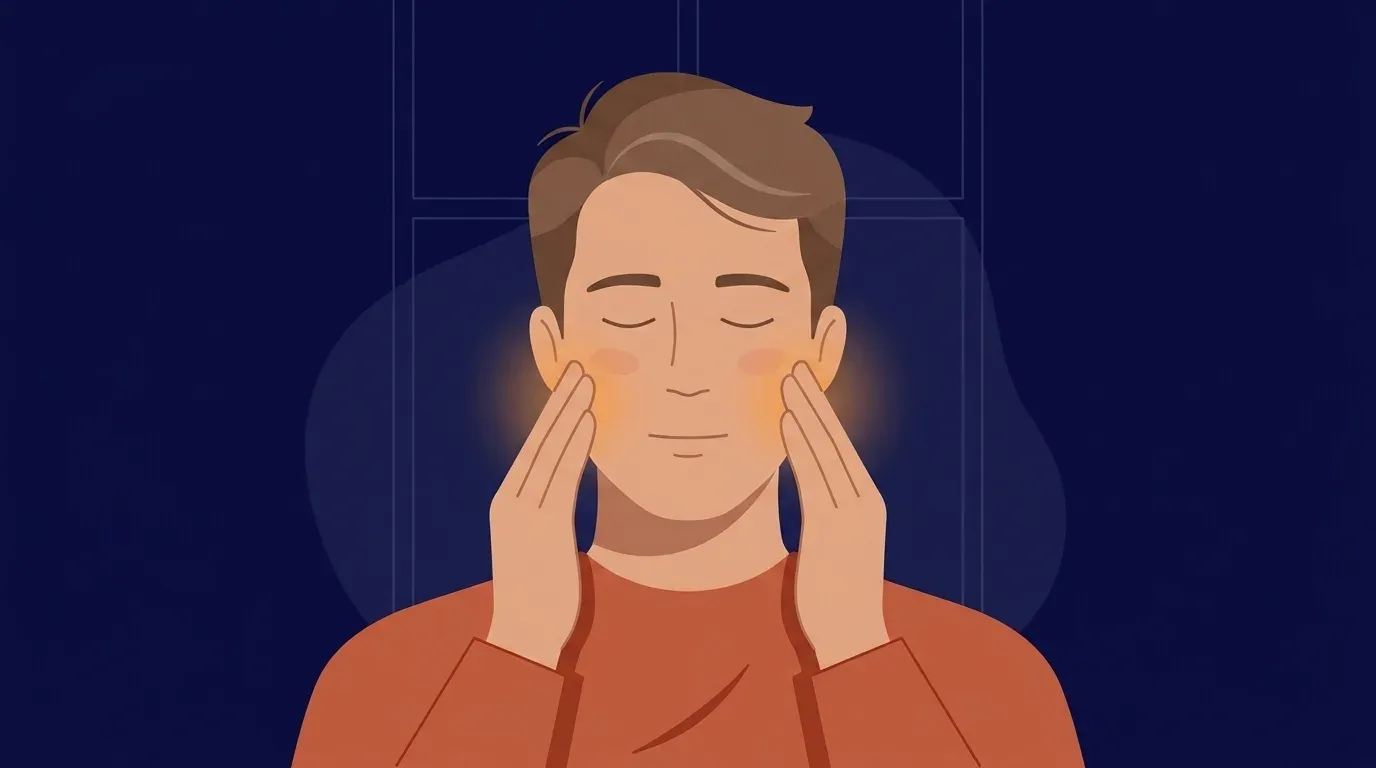
The muscles that clench are reachable with your own hands. Here are the three that matter, where they sit, and how to work each one — the whole routine, in about five minutes a day.
As Seen In





Why it happens
The jaw is where you feel it. It isn't where it starts.
Your jaw doesn't decide to do this. Your nervous system does — mostly without asking you first. It isn't your bite. It isn't weak willpower. And it's never one thing.
- Stress & emotionThe best-established piece — for daytime clenching. At night it colours the picture rather than flipping the switch.
- Sleep & breathingMost of the night's activity clusters in lighter sleep, around the moments your brain briefly surfaces.
- Daytime loadEight hours of quiet bracing at a desk doesn't politely clock off at bedtime.
- What you drink & takeAlcohol, caffeine, nicotine and some medications are all associated with more jaw activity.
- GeneticsSome of this simply runs in families. It isn't something you did.
- Posture & habitsWhere your head, neck and tongue sit changes what the jaw is quietly asked to hold.






Single-cause fixes keep disappointing people for the same reason. Fix the bite, manage the stress, buy the guard — each aims at one input and hopes it was the one. We'd rather measure the thing they all end up in.
The research behind thisTarget Areas
The 3 muscle groups causing your jaw tension
Most jaw pain and tension comes from these overworked muscles. Learning where they are is the first step to releasing them.
01
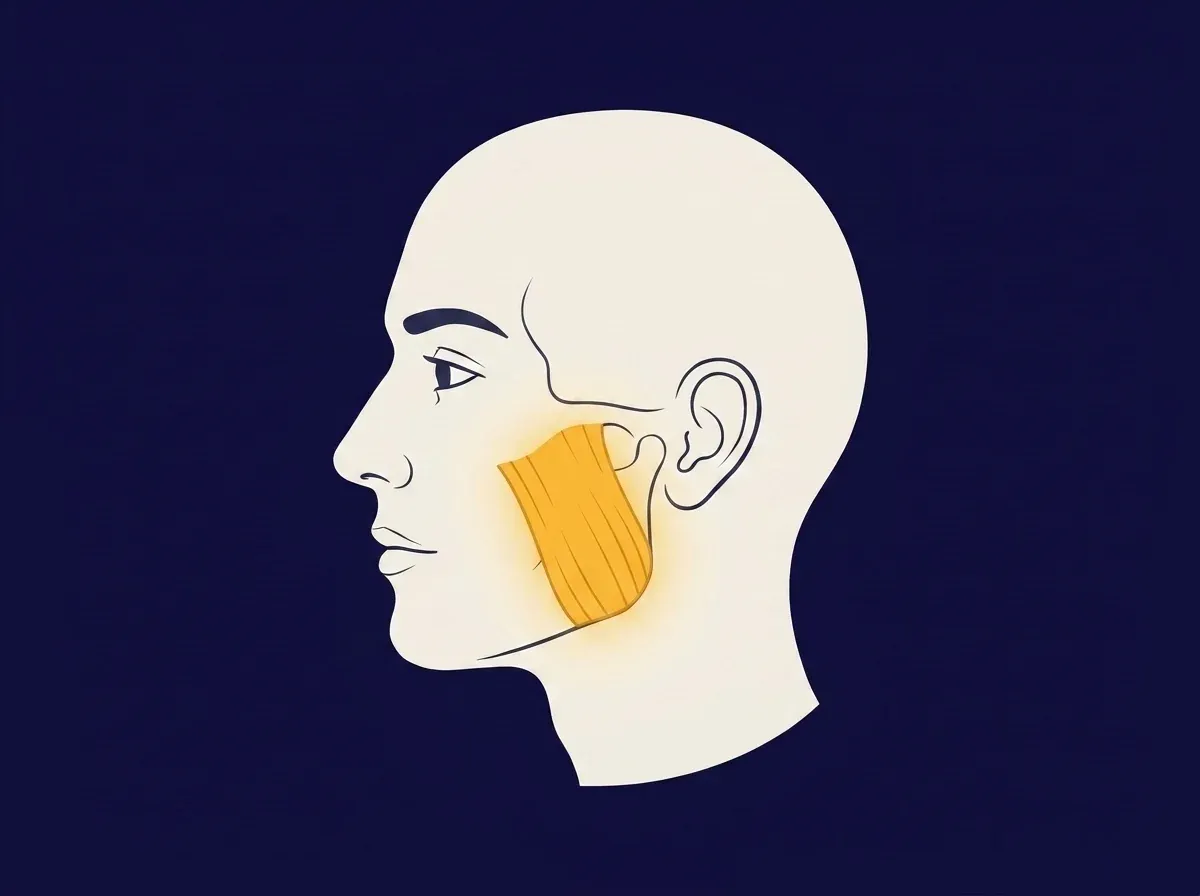
Masseter release: how to massage the masseter muscle
Along your jawline, between cheekbone and jaw angle. The primary chewing muscle — often the most tense in bruxism and clenching.
02
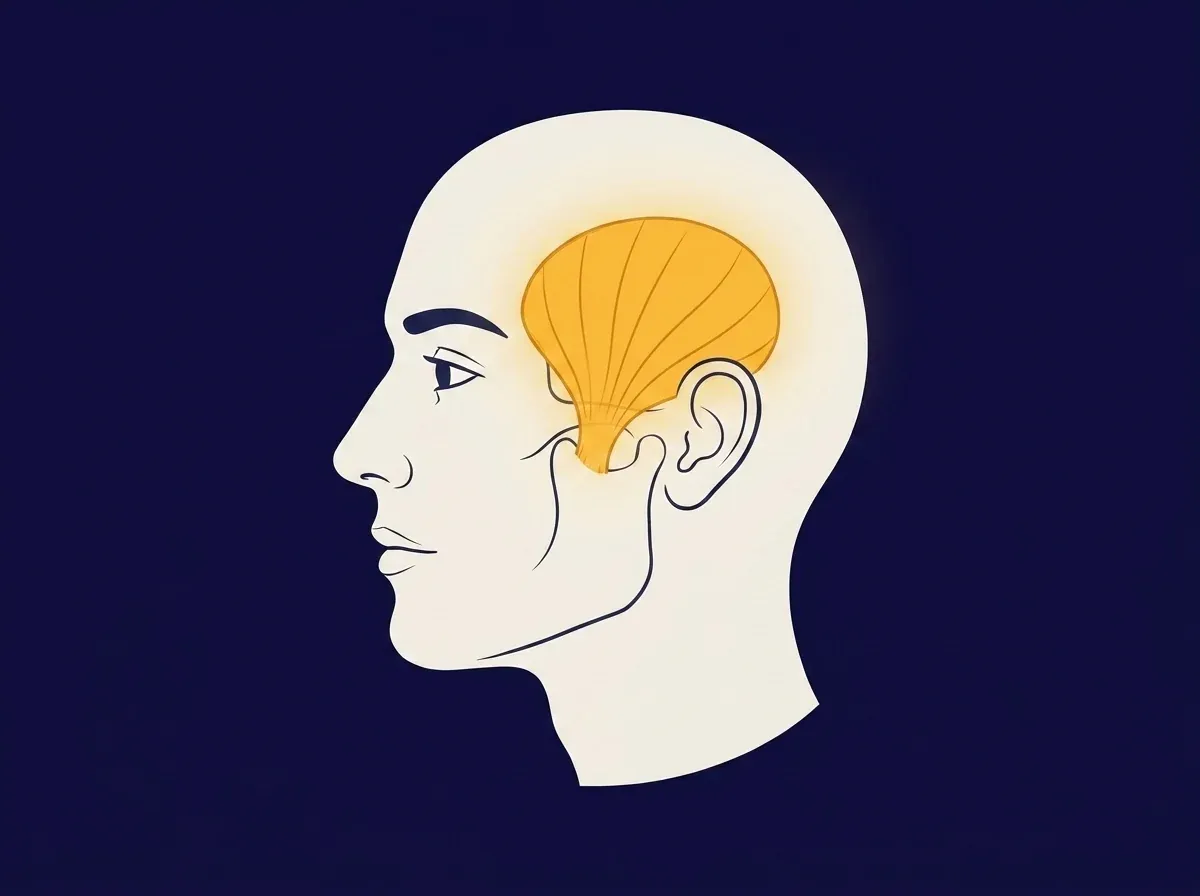
Temporalis Muscle
Temple area, above and in front of your ears. Connects to jaw movement and often contributes to tension headaches.
03
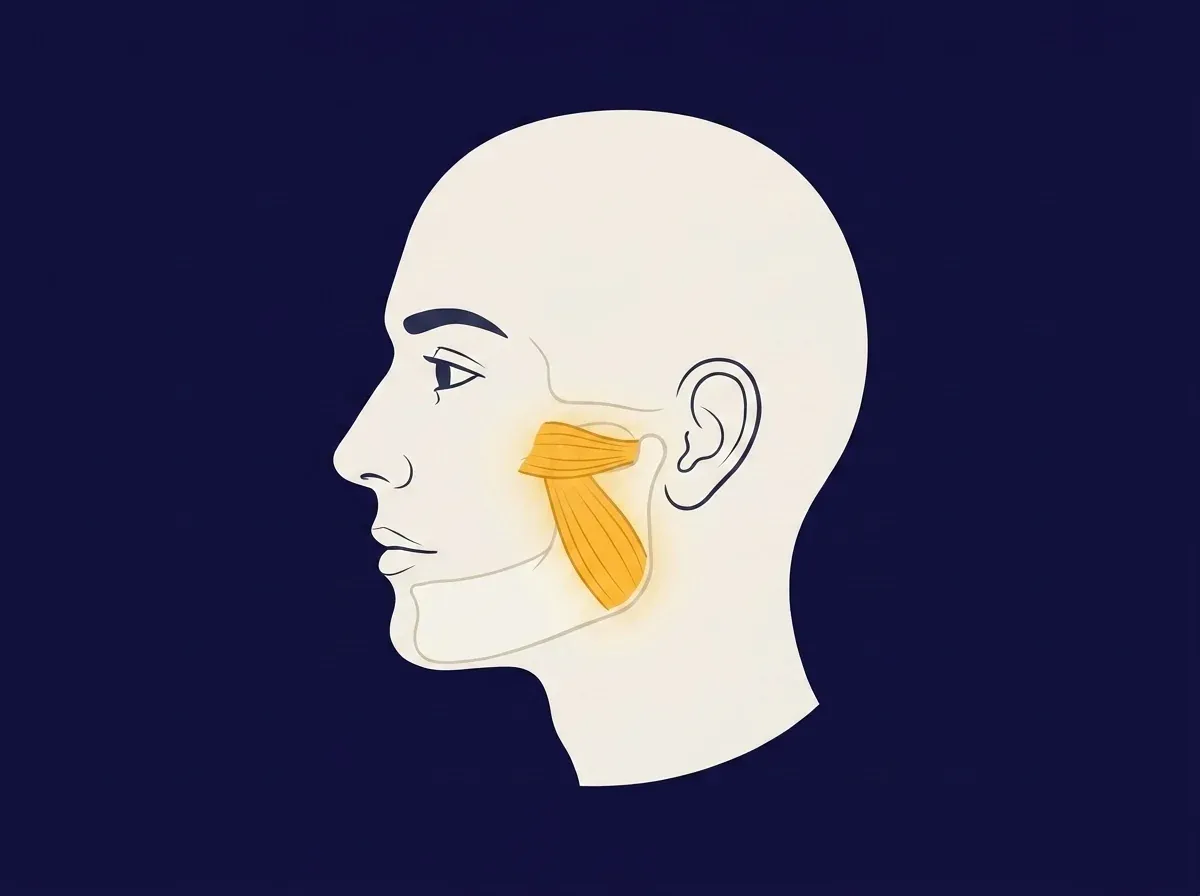
Pterygoid Muscles
Inside the mouth, along the inner cheek. Deep muscles that control jaw protrusion and lateral movement.
That's the routine. Nothing to buy, nothing to sign up for. What the app adds is the reminding and the tracking — whether your jaw is actually getting looser week to week, which is the part you can't tell from inside your own head.
When to stop, and who to ask
Massage is safe for most people and it is not the answer for everything.
- Sharp pain rather than the dull ache of a tight muscle — stop, and don't push through it
- A jaw that locks, catches, or won't open fully
- Swelling, heat, or pain with a fever
- Numbness or pins and needles in the face
- Pain that is getting worse week on week despite the work
Any of those is worth taking to a dentist, doctor or physiotherapist. We're not a substitute for one, and this page isn't a diagnosis.
The Jaw Behaviour Quiz
Two minutes to a clearer picture of what your jaw is doing.
Fourteen questions about your days, your nights and what you put into them — and a read on where yours points. A starting point, not a diagnosis.


14 questions · about 2 minutes · free, no account needed
Do you wake up with a tired, stiff or sore jaw?
- Most mornings
- Sometimes
- Rarely or never
Get my result
Backed by






Frequently Asked Questions
How do you release a tight masseter?
How often should I massage my jaw?
Can jaw massage make TMJ worse?
Should I use heat or ice before massaging?
Do I need a massage tool?
Related guides
The JawSense app
Massage is just one part of the routine
The JawSense app combines massage with exercises, relaxation techniques, and a pain diary for a complete self-management approach.


 Scan to get the app
Free · iOS & Android · works without the device
Or start with the 2-minute jaw quiz
“The check-ins made me realise I was clenching all day at work. Now I catch myself and let go of it. My awareness has completely changed.”