Guide
Why your jaw clicks
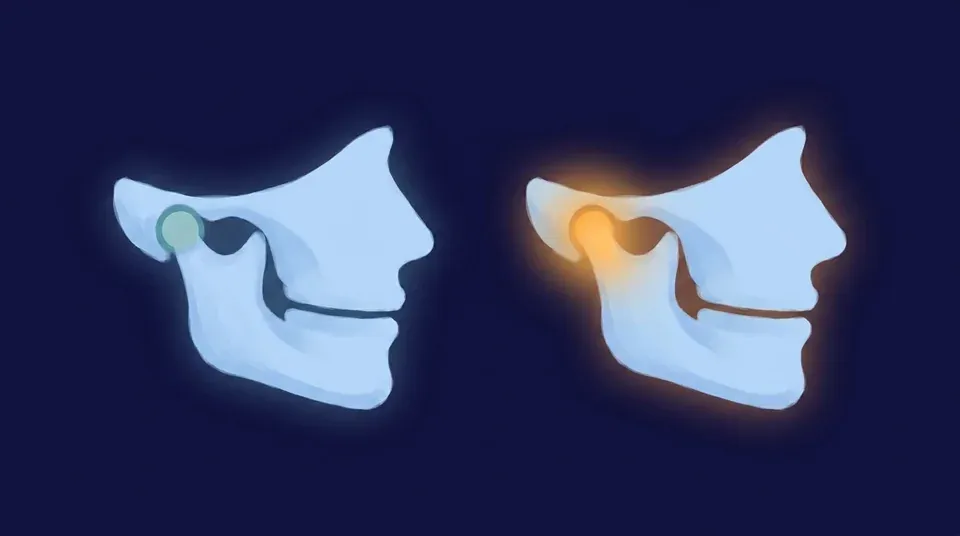
Clicking on its own, without pain and without locking, is common and usually not a problem. It normally means the disc in the joint is shifting as you move. Here is what causes it, what actually helps, and when to get it looked at.

As Seen In





Why it happens
The jaw is where you feel it. It isn't where it starts.
Your jaw doesn't decide to do this. Your nervous system does — mostly without asking you first. It isn't your bite. It isn't weak willpower. And it's never one thing.
- Stress & emotionThe best-established piece — for daytime clenching. At night it colours the picture rather than flipping the switch.
- Sleep & breathingMost of the night's activity clusters in lighter sleep, around the moments your brain briefly surfaces.
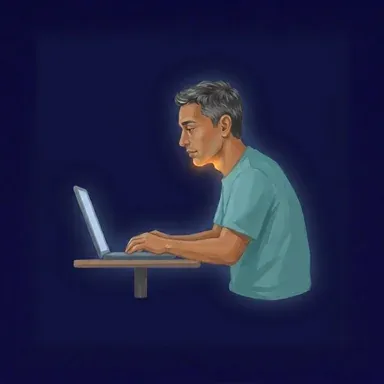
- Daytime loadEight hours of quiet bracing at a desk doesn't politely clock off at bedtime.
- What you drink & takeAlcohol, caffeine, nicotine and some medications are all associated with more jaw activity.
- GeneticsSome of this simply runs in families. It isn't something you did.
- Posture & habitsWhere your head, neck and tongue sit changes what the jaw is quietly asked to hold.






Single-cause fixes keep disappointing people for the same reason. Fix the bite, manage the stress, buy the guard — each aims at one input and hopes it was the one. We'd rather measure the thing they all end up in.
The research behind thisThree exercises
Exercises specifically for clicking jaws
These exercises train controlled jaw movement and can help reduce clicking over time.
01
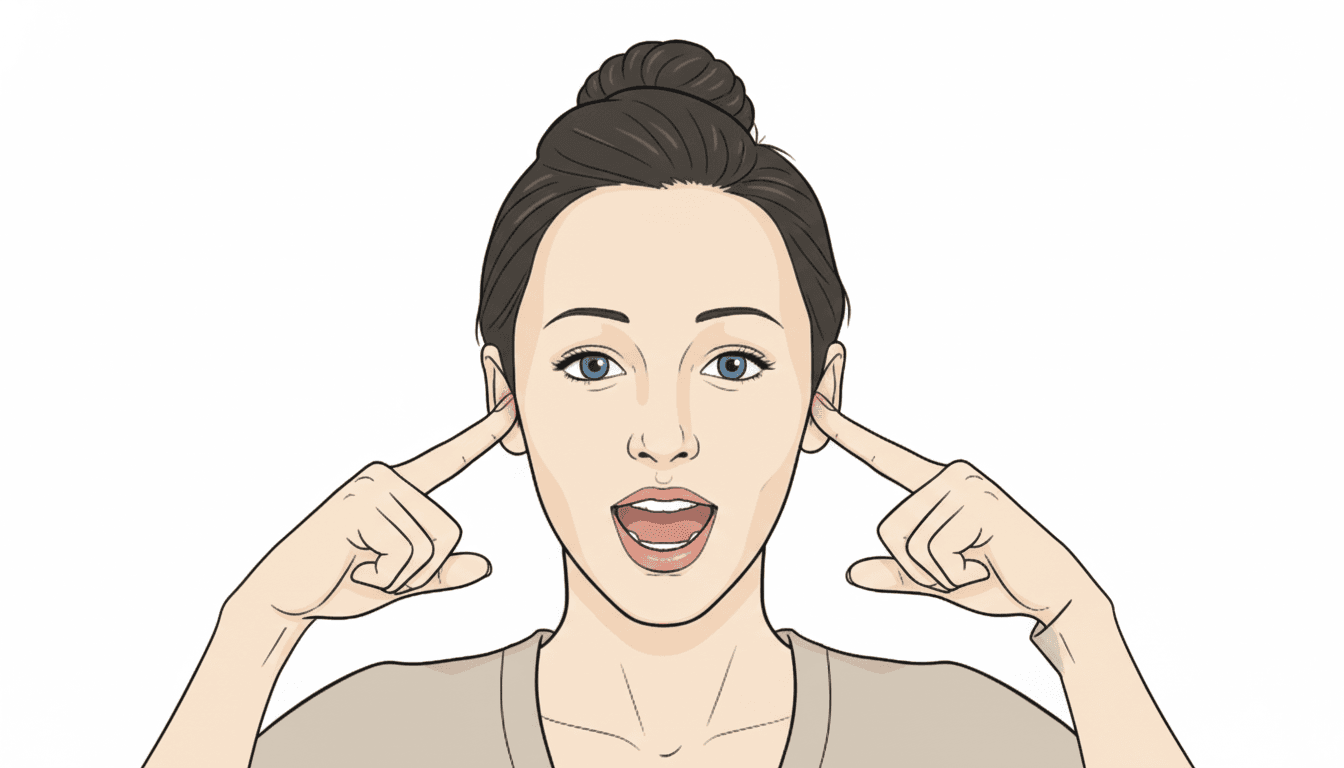
Goldfish Exercise (Partial Opening)
Place tongue on roof of mouth, one finger on TMJ, one on chin. Open halfway in controlled motion.
02
Controlled Opening with Tongue Position
Keep tongue pressed to roof of mouth while opening slowly. This limits how far you can open and stabilizes the joint.

03
N-Stretch Coordination
Say 'N' to position tongue, then open slowly while watching in a mirror to ensure straight movement.

That's the whole routine — no account, no app needed. The app sequences these over six weeks, reminds you, and tracks whether the clicking is changing; that's the part that's hard to do alone.
When clicking needs professional attention
Most clicking is harmless and manageable. But some signs warrant a professional evaluation.
- Jaw gets stuck or locked — can't open or close fully
- Clicking with significant pain — not just discomfort, but real pain
- Progressive worsening — getting worse despite exercises
- Sudden onset after injury — trauma to the jaw or face
The Jaw Behaviour Quiz
Two minutes to a clearer picture of what your jaw is doing.
Fourteen questions about your days, your nights and what you put into them — and a read on where yours points. A starting point, not a diagnosis.

14 questions · about 2 minutes · free, no account needed
Do you wake up with a tired, stiff or sore jaw?
- Most mornings
- Sometimes
- Rarely or never
Get my result
Why JawSense
What's causing your jaw to click?
Not all clicking is the same. Understanding your type helps you know what to expect.
Backed by






Frequently Asked Questions
Is a clicking jaw something to worry about?
What is the click, physically?
Why does my jaw click only sometimes?
Does teeth grinding cause jaw clicking?

Related guides
The JawSense app
A complete programme for clicking jaws
The JawSense app includes a programme specifically designed for TMJ clicking and disc issues, with exercises sequenced appropriately over 6+ weeks.


 Scan to get the app
Free · iOS & Android · works without the device
Or start with the 2-minute jaw quiz
“The check-ins made me realise I was clenching all day at work. Now I catch myself and let go of it. My awareness has completely changed.”