About JawSense
We measure what the jaw does at night, and help change it.
JawSense is a small team in Delft and London. We build a sensor you wear to bed, an app for the daytime, and a biofeedback programme that trains the jaw to let go — for people who grind and clench their teeth. We started it because we do too.
Why we started
Ten years of jaw pain, and nobody had ever measured it.
“We didn't start JawSense because the jaw is a business opportunity. We started it because we'd sat in those waiting rooms ourselves — years of clues, no answers, nobody whose job it was. Someone's job should be the whole system. Fine. Ours, then.”
Neither of us came from dentistry. That turned out to matter: nobody had told us to look only at the teeth, so we looked at the whole system — the muscles, the nervous system, the night. Four years on there's a wearable built to medical-device standards, algorithms trained on more than a terabyte of sleep-lab recordings we enriched and labelled ourselves, and a group of engineers and clinicians whose job is to tell us when we're wrong.
Meet the people who build it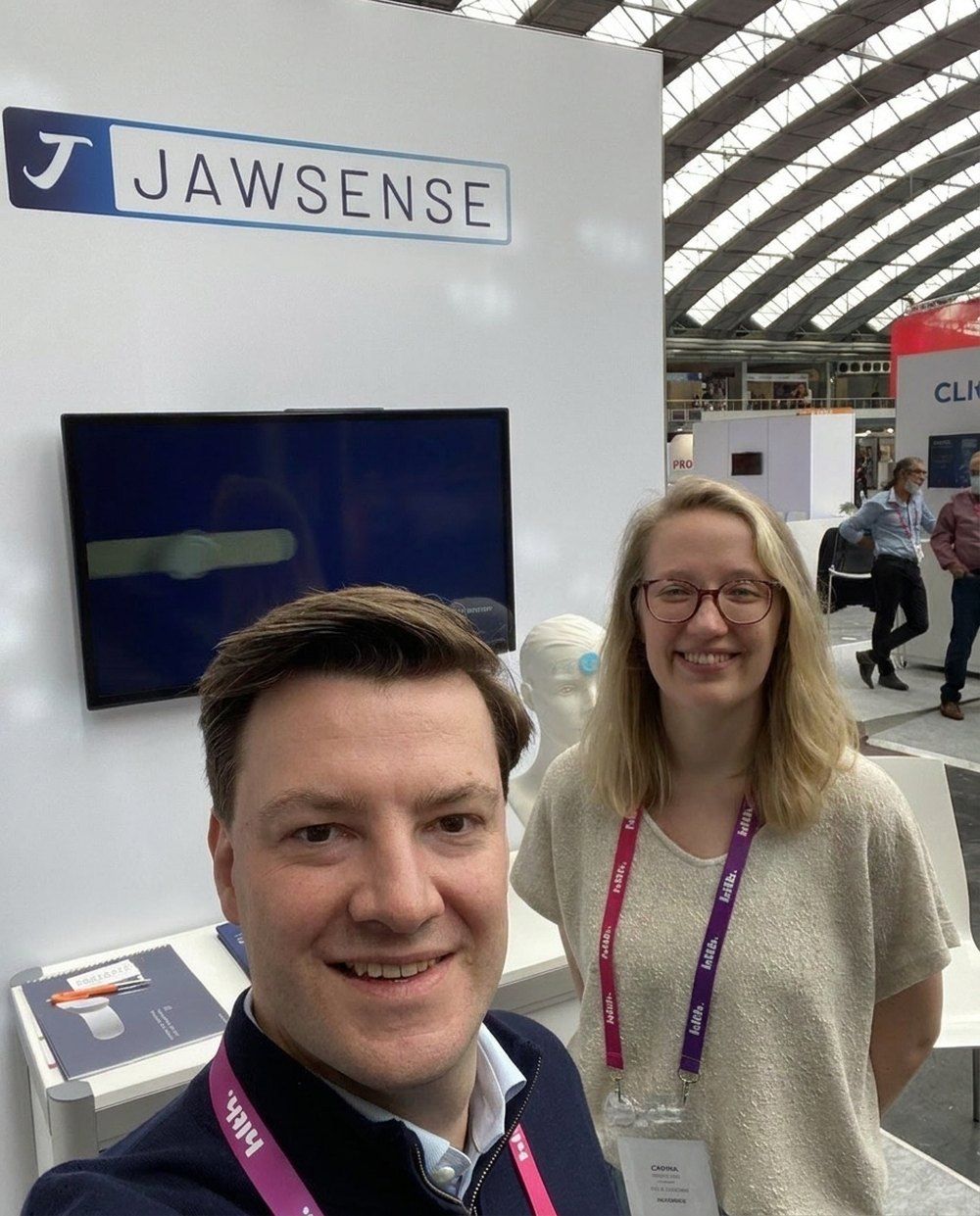
A problem hiding in plain sight
1 in 5
adults grind or clench in their sleep — more when it's actually measured
Nº2
most common musculoskeletal pain there is, after chronic low back pain — per the NIH's dental research institute
2×
as many women as men develop ongoing jaw problems
For something that common you'd expect a shelf of options. There's a mouthguard, which protects your teeth without changing the grinding, and a sleep study almost nobody with jaw symptoms is ever offered. That's most of the shelf.
Why the jaw
Hard to rest, easy to miss
The jaw is some of the strongest muscle you have, wired into your tongue, neck, breathing and stress. That's why it goes wrong quietly.
Rest is the one thing it rarely gets
You breathe, talk and eat with it, and it moves every time your face does. Nothing takes it out of service — and when the clenching happens without you noticing, resting it is close to impossible.
Jaw trouble doesn't stay in the jaw
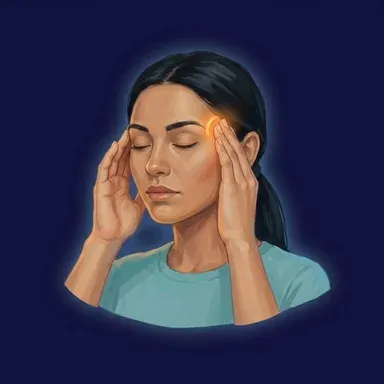
The jaw, teeth, face and upper neck share one relay in the brainstem, so the ache turns up next door: temples, behind the eye, the ear, the top of the neck. It's why so many people spend years being looked at for the wrong thing.
Why jaw pain travelsThe night is a black box
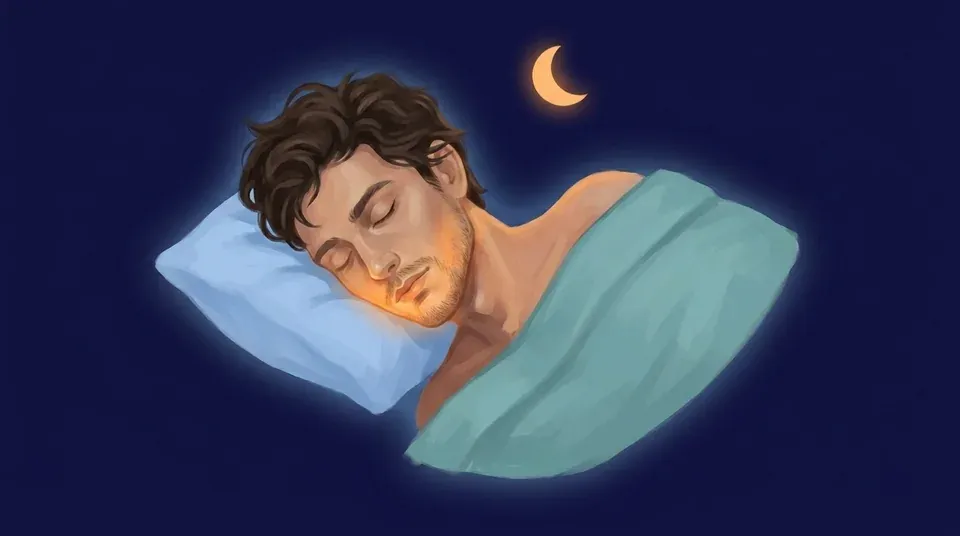
Awake, you can learn to catch it. Asleep, you can't feel it or stop it, and by morning all you have is a sore jaw and no idea what produced it. Everybody tracks their sleep. Nobody tracks what their jaw does during it.
What people tell us
This is the message we get every week
Real messages from people in our community. We keep them where we can see them.
I've been dealing with night-time teeth clenching since I was a teenager — I'm now 40 and a mum, and it's really starting to take a serious toll. I've tried everything over the years (including Botox) and the NHS has basically said there's nothing more they can do.
Everything I do during the day is destroyed at night by the chronic grinding and clenching. I'm in chronic pain that never goes away. If there is any way I can try out the device, I am desperate.
I once cut my holiday short because I forgot my nightguard and I was afraid I was going to ruin my teeth. I can't believe I was going to keep living like that.
I just desperately want to try it! I have mouthguards made which I bite through and they never solve the problem. Night guards only make it worse for me.
How we think
Three things we're stubborn about
A label is not an explanation
Bruxism, TMD, TMJ — those words name symptoms, not what's happening underneath. Underneath it's usually an overloaded muscle doing something your nervous system has learned. What's learned can be re-learned.
Intervention should never be blind
Most jaw advice is given without anyone looking at the thing it's meant to change. We measure first, then work on what the measurements say.
Bruxism starts in the brain, not the bite
Most approaches start at the teeth, because that's where the damage shows. The activity is driven from the nervous system while you sleep. So we start with the muscles and the nerves, not the mould.
The science we build on
Where we stop
What we are, and what we're not
We help you look after your jaw, face and neck, understand what's going on, and change the patterns that keep generating tension. What we don't do is diagnose or treat: we're not a clinic, and nothing here replaces one.
Most sore, tight, clicking jaws improve with better care and changed habits — but some things deserve a professional's eyes: pain that's getting worse rather than better, a jaw that locks or won't open, significant swelling, pain with a fever. We'll always tell you when something is beyond what we're for.
Backed by & built with










Questions, ideas, or something we've got wrong? Email us
See how we measureThe JawSense app
When you want to know what your own jaw is doing
The app is free and works from today — check-ins, exercises and routines, all there before you spend anything.
Free · iOS & Android · works without the device