Guide
Stop clenching your jaw — start by noticing it.
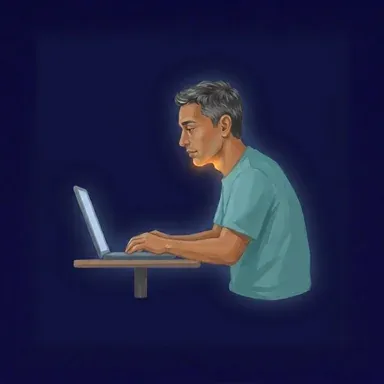
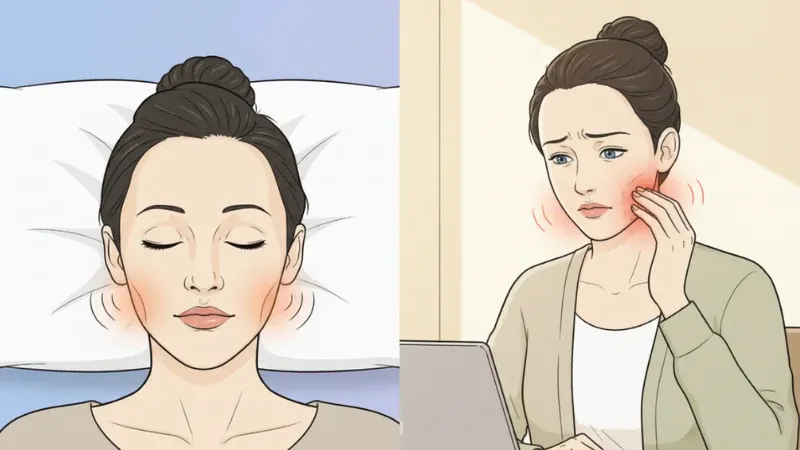
Clenching is the one people miss: usually silent, often nothing to see — just hours of load while your attention is elsewhere. It happens by day, when you can learn to catch it. And it carries on at night, when you can't.
As Seen In





The Problem
Why 'just relax' doesn't work
You can't consciously stop a behaviour you're not conscious of. By the time you notice the headache or the tight jaw, you've been clenching for hours. Stress management is good for you, and less stress may well mean quieter nights — but it doesn't teach you to catch the clench while it's happening, and it can't tell you what your jaw actually did while you slept.
Daytime clenching happens semi-consciously, which is the good news: awareness cues can help you notice it and choose to let go. Night-time clenching is a different problem — you're not there to notice anything, so it has to be measured before anyone can say what it's doing.
Clenching doesn't clock off at bedtime
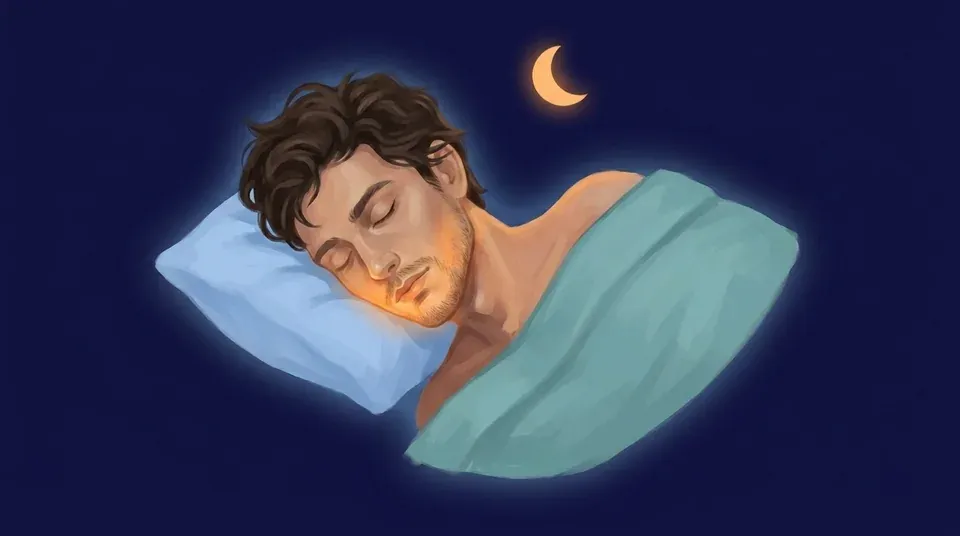
Most people who clench by day also clench at night, and the two are caught in completely different ways. The daytime half you can learn to catch yourself: check-ins, a diary, the habit of noticing. The night-time half you cannot — you're asleep for it, a partner only hears grinding rather than clenching, and worn teeth are the record of years rather than a reading of last week. That half has to be measured.
It's the same behaviour on both sides of sleep. Only one side can be observed without a sensor.
Why it happens
The jaw is where you feel it. It isn't where it starts.
Your jaw doesn't decide to do this. Your nervous system does — mostly without asking you first. It isn't your bite. It isn't weak willpower. And it's never one thing.
- Stress & emotionThe best-established piece — for daytime clenching. At night it colours the picture rather than flipping the switch.
- Sleep & breathingMost of the night's activity clusters in lighter sleep, around the moments your brain briefly surfaces.
- Daytime loadEight hours of quiet bracing at a desk doesn't politely clock off at bedtime.
- What you drink & takeAlcohol, caffeine, nicotine and some medications are all associated with more jaw activity.
- GeneticsSome of this simply runs in families. It isn't something you did.
- Posture & habitsWhere your head, neck and tongue sit changes what the jaw is quietly asked to hold.


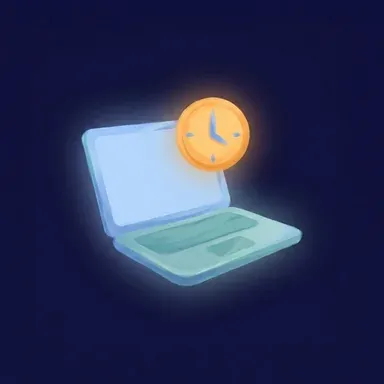
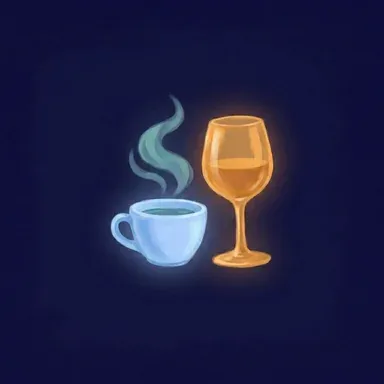

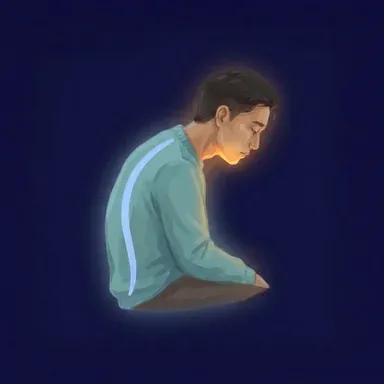
Single-cause fixes keep disappointing people for the same reason. Fix the bite, manage the stress, buy the guard — each aims at one input and hopes it was the one. We'd rather measure the thing they all end up in.
The research behind thisThe Jaw Behaviour Quiz
Two minutes to a clearer picture of what your jaw is doing.
Fourteen questions about your days, your nights and what you put into them — and a read on where yours points. A starting point, not a diagnosis.
14 questions · about 2 minutes · free, no account needed
Do you wake up with a tired, stiff or sore jaw?
- Most mornings
- Sometimes
- Rarely or never
Get my result
How It Works
From unconscious habit to conscious control
01
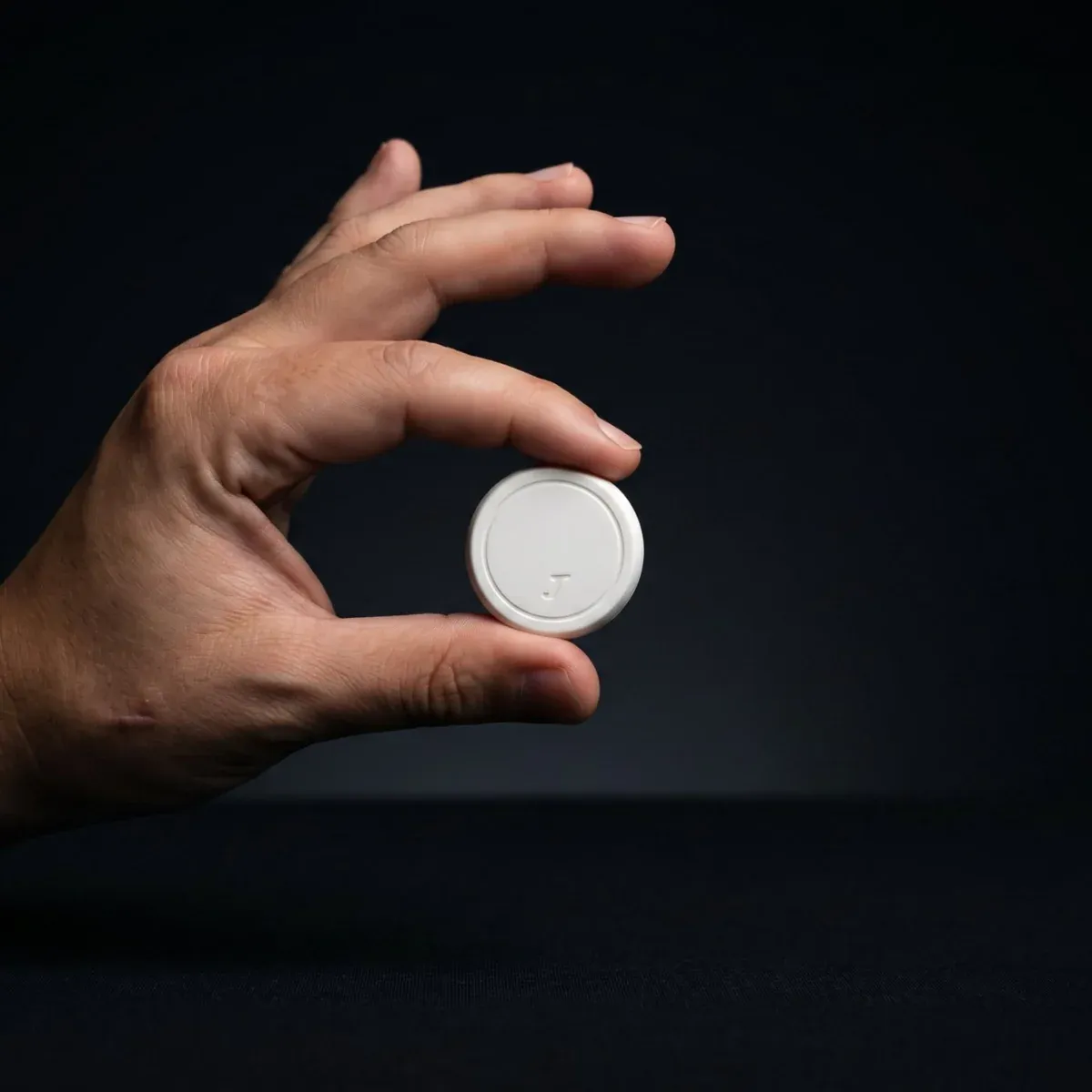
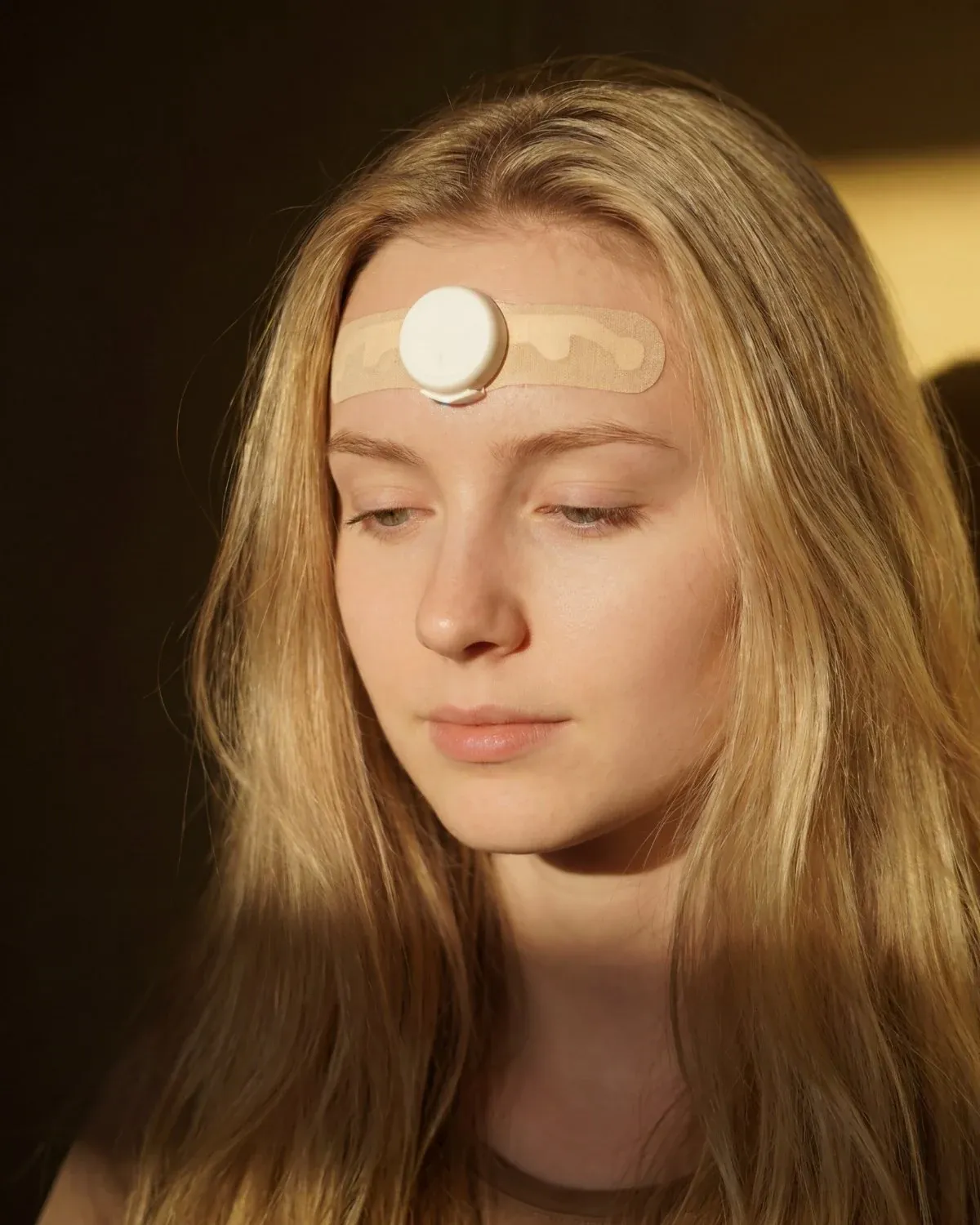
Wear the device
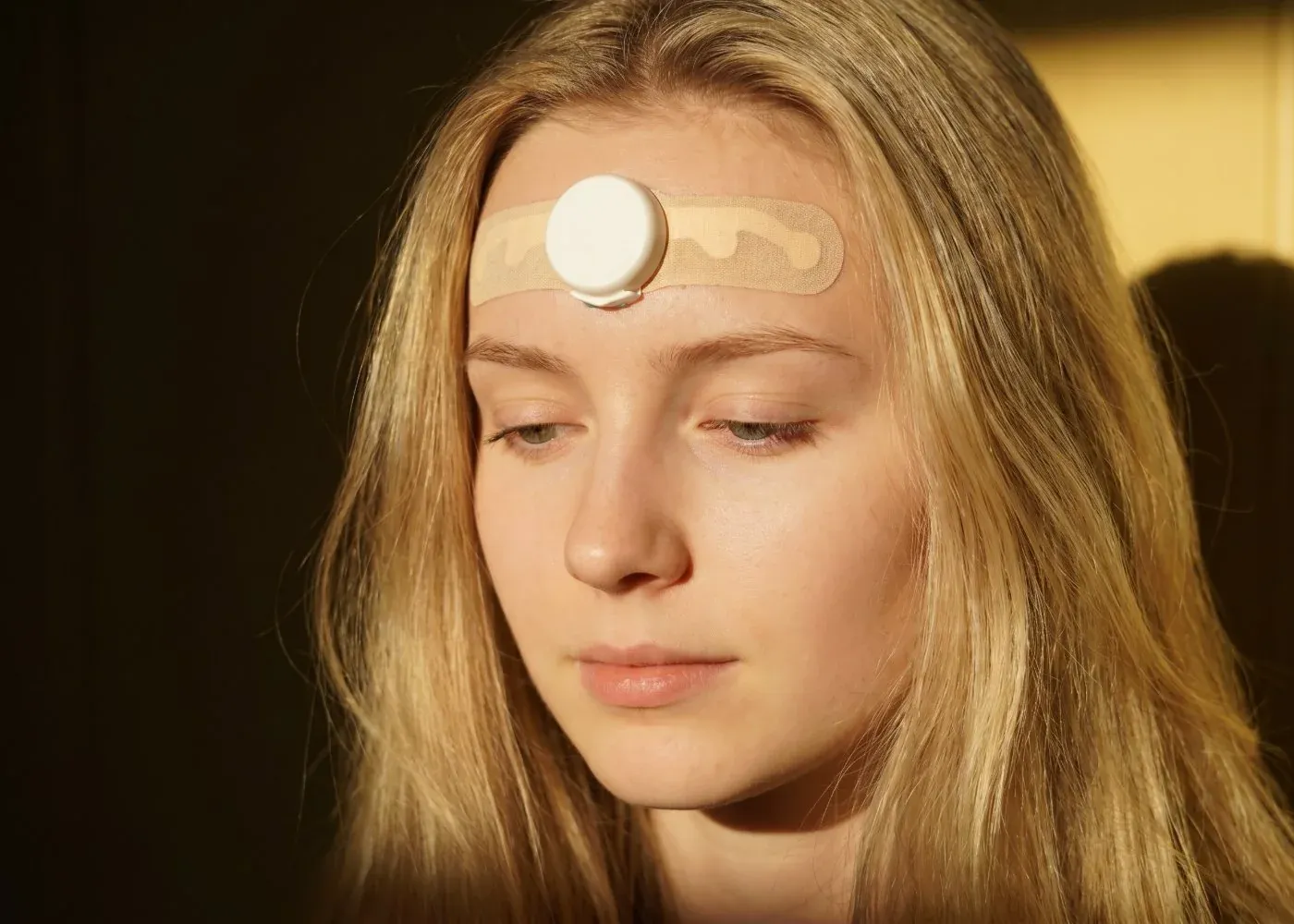
As small and light as a €2 coin. A discreet wearable that reads your jaw muscle's own signal throughout your day.
02
Get real-time alerts
When clenching is detected, a gentle cue (vibration or electrical) prompts you to release tension. Most people clench far more often than they realise.

03
Learn to notice
Over 2-4 weeks, most people find they notice clenching earlier — sometimes even without the device.
04
Track your progress
See patterns, triggers, and improvement in the companion app. Share reports with your healthcare provider.
What the research actually supports
Available Now
Learn to notice — with the app
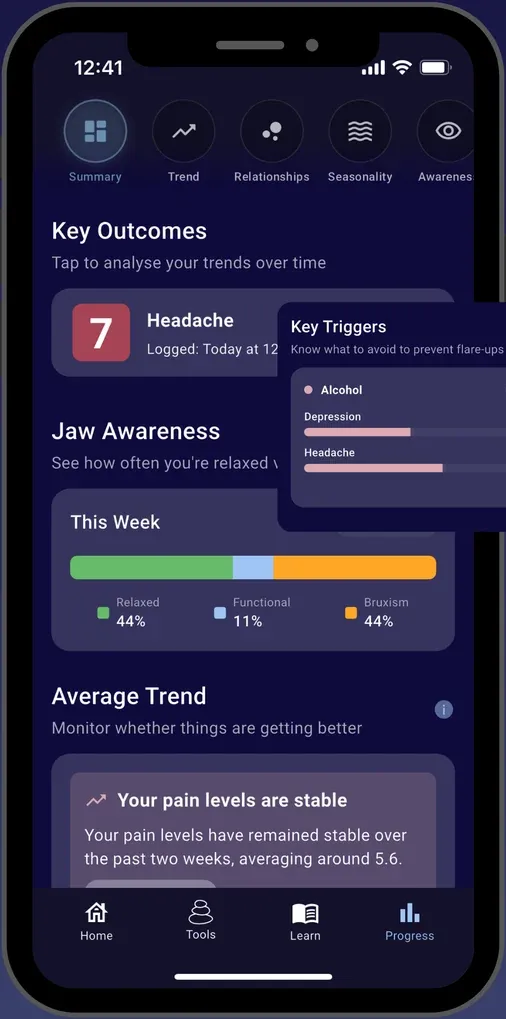
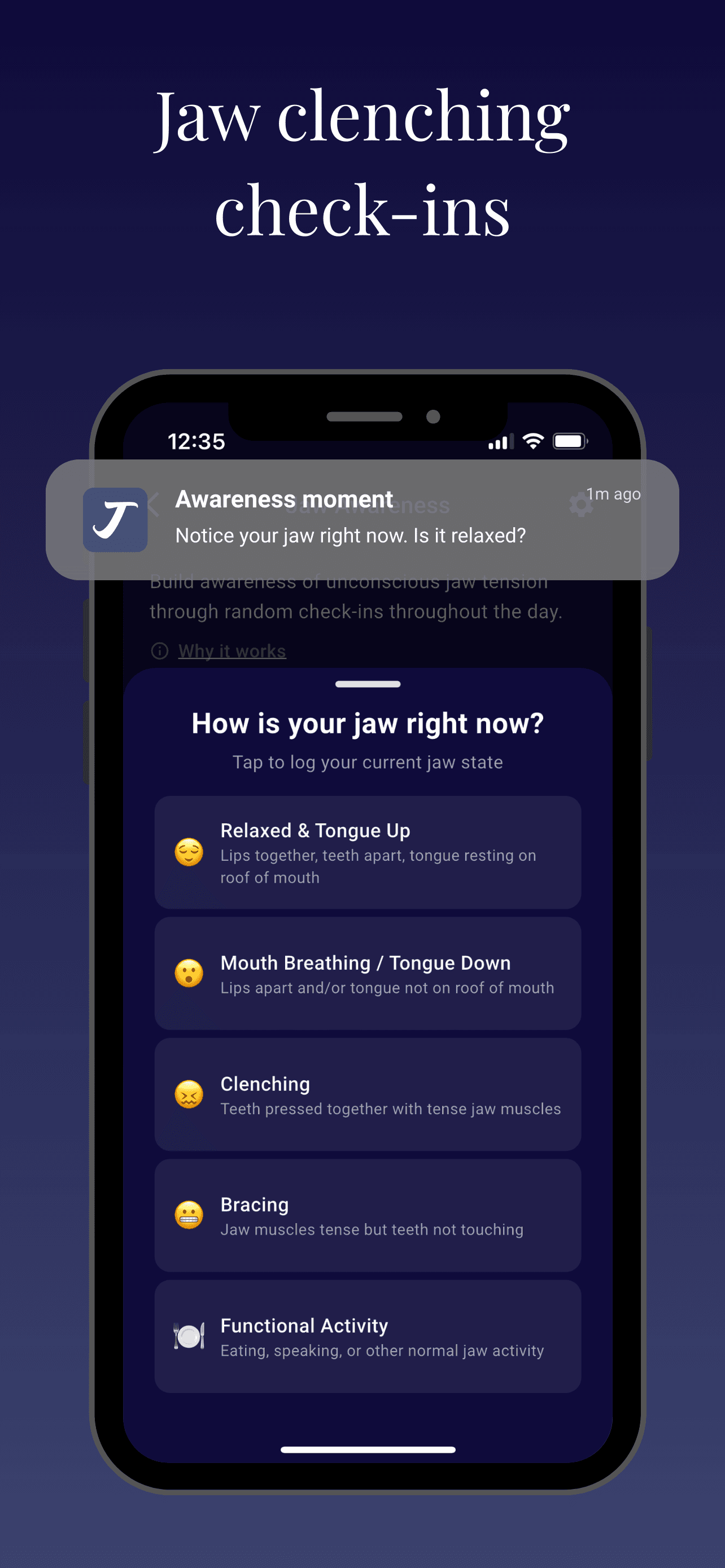
The JawSense app checks in with you at random moments through the day — a quick prompt that helps you notice when you're clenching. Pair with JawSense ONE for real-time biofeedback.
Try the check-ins, free →Why JawSense
Why check-ins beat trying to remember
Built on the approach clinicians have studied since the '80s: notice the tension, release it, repeat.
Your next step
Measure it first. Then change it.
The Assessment shows what your jaw actually does. The Programme works on it. The app runs alongside, free.
01 · See it
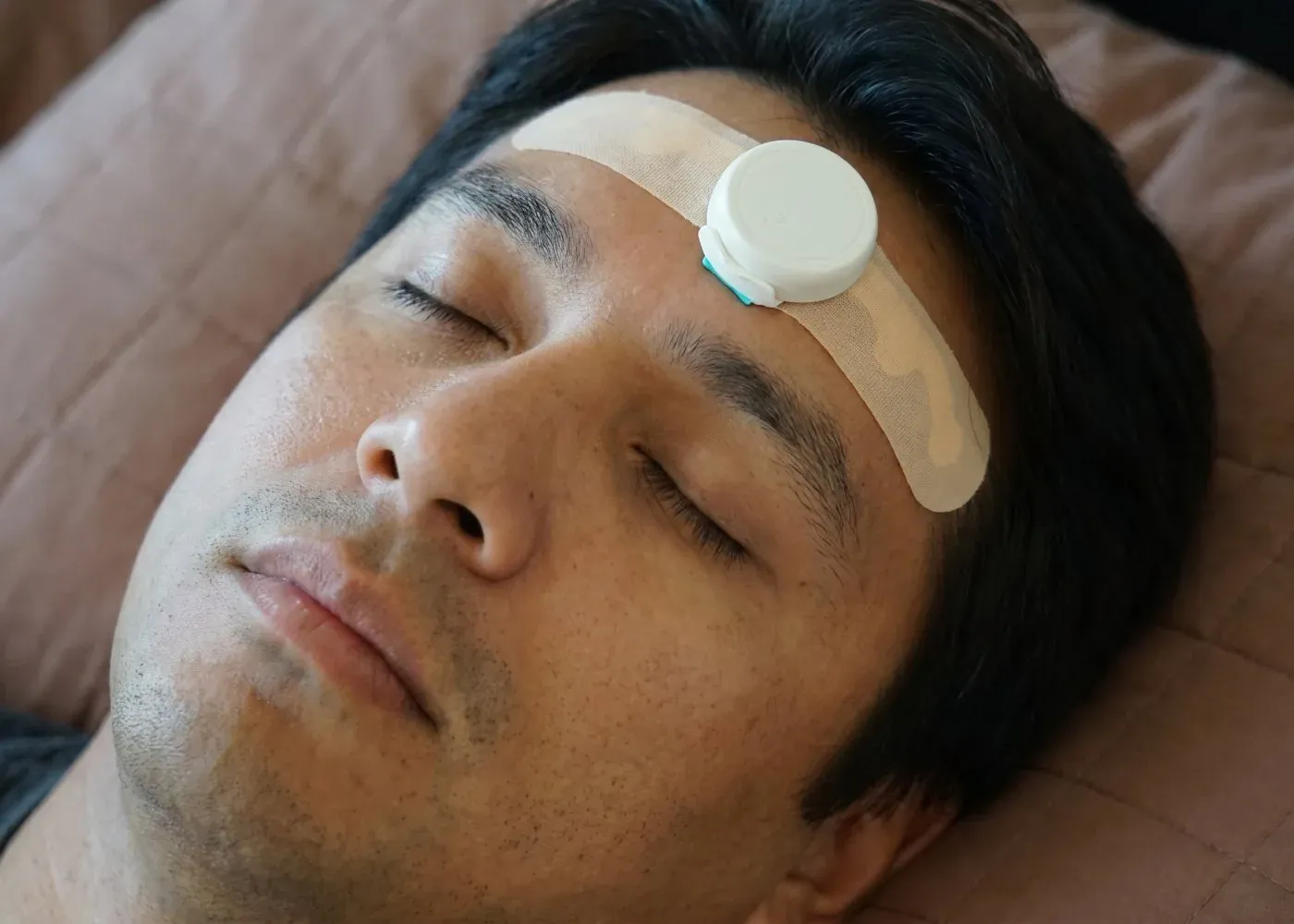
Jaw Activity Assessment
Clenching rarely clocks off at bedtime — two measured nights show what happens once you're asleep. The app's daytime check-ins run alongside — they map the half you're awake for, and the sensor takes that half over directly once the Day Biofeedback Programme ships.
- Two nights in your own bed
- Your Jaw Score and your Jaw Activity Report, yours to keep
- The Results Walkthrough — a 15-minute call to go through your results
02 · Change it · nights
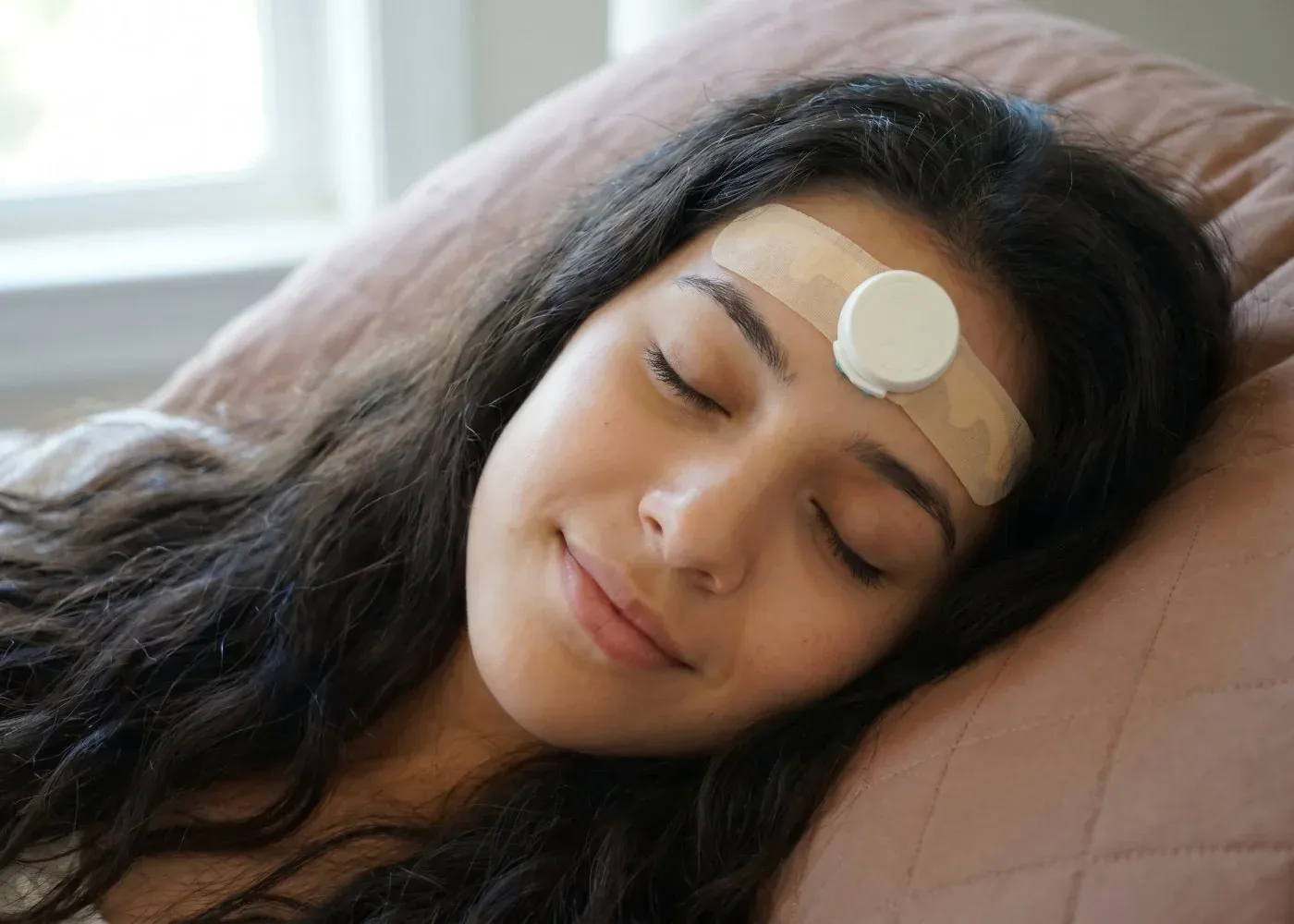
The Night Biofeedback Programme
Then work on the nights: twelve weeks of gentle, personalised biofeedback, so the habit gets interrupted while it is happening. Release work in the app runs alongside, free — guided exercises, and tracking for whether either half is shifting.
- Starts from your own Assessment, never from a guess
- Twelve weeks of biofeedback tuned to your own jaw, in small groups
- A cue the moment your jaw goes to work — so the habit gets interrupted, not just recorded
03 · Alongside · days
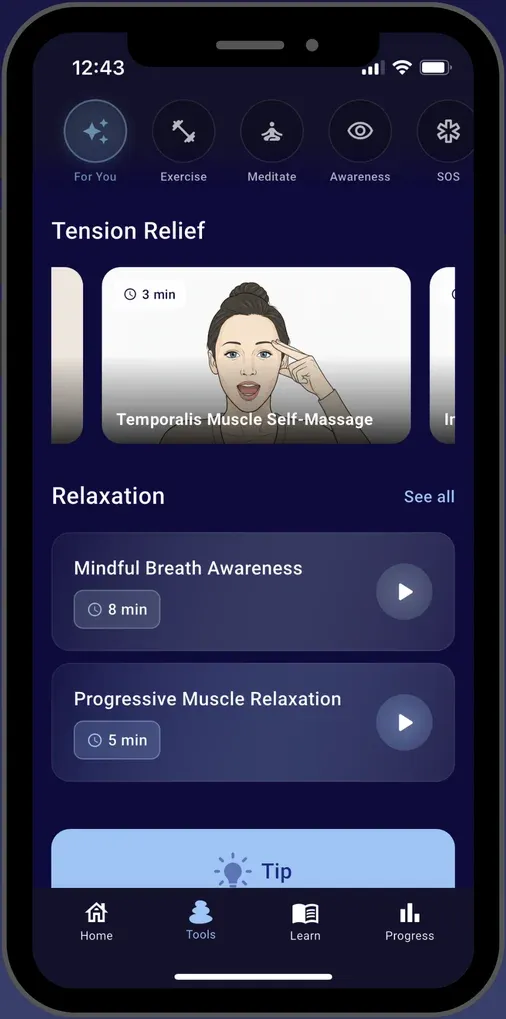
The daytime half, in the app
The nights are one half. The other happens while you are awake, and it does not wait for a device — check-ins that catch a clenched jaw while you can still feel it, release work you can do at a desk, and a record of whether either half is shifting.
- Daytime check-ins, at varied moments so they keep catching you
- Guided release and jaw-relaxation exercises
- Yours whether or not you ever measure a night
Real Results
"I'd been told to wear a night guard and 'manage stress' for 10 years. JawSense was the first thing that actually explained the difference between daytime and nighttime grinding. The EMA check-ins helped me realize I was clenching constantly while working."
Backed by






Frequently Asked Questions
From the Blog
Jaw clenching resources
Daytime clenching: what it is and how to catch it

Related guides
The JawSense app
Start by noticing it
Download JawSense, free to start, and answer your first check-in today. Or take the 2-minute jaw quiz to see where to begin.


 Scan to get the app
Free · iOS & Android · works without the device
Or start with the 2-minute jaw quiz
“The check-ins made me realise I was clenching all day at work. Now I catch myself and let go of it. My awareness has completely changed.”


The Jaw Behaviour Quiz
2 min · 14 questions · free