Guide
The jaw exercises and how to do them
Which movement, how many reps, how often, and what each one is actually training. The whole routine is on this page — nothing behind a signup.

As Seen In





Why it happens
The jaw is where you feel it. It isn't where it starts.
Your jaw doesn't decide to do this. Your nervous system does — mostly without asking you first. It isn't your bite. It isn't weak willpower. And it's never one thing.
- Stress & emotionThe best-established piece — for daytime clenching. At night it colours the picture rather than flipping the switch.
- Sleep & breathingMost of the night's activity clusters in lighter sleep, around the moments your brain briefly surfaces.
- Daytime loadEight hours of quiet bracing at a desk doesn't politely clock off at bedtime.
- What you drink & takeAlcohol, caffeine, nicotine and some medications are all associated with more jaw activity.
- GeneticsSome of this simply runs in families. It isn't something you did.
- Posture & habitsWhere your head, neck and tongue sit changes what the jaw is quietly asked to hold.






Single-cause fixes keep disappointing people for the same reason. Fix the bite, manage the stress, buy the guard — each aims at one input and hopes it was the one. We'd rather measure the thing they all end up in.
The research behind thisSample Exercises
Exercises from published trials
Every exercise comes with step-by-step instructions, how often to do it, and the research it comes from.
01
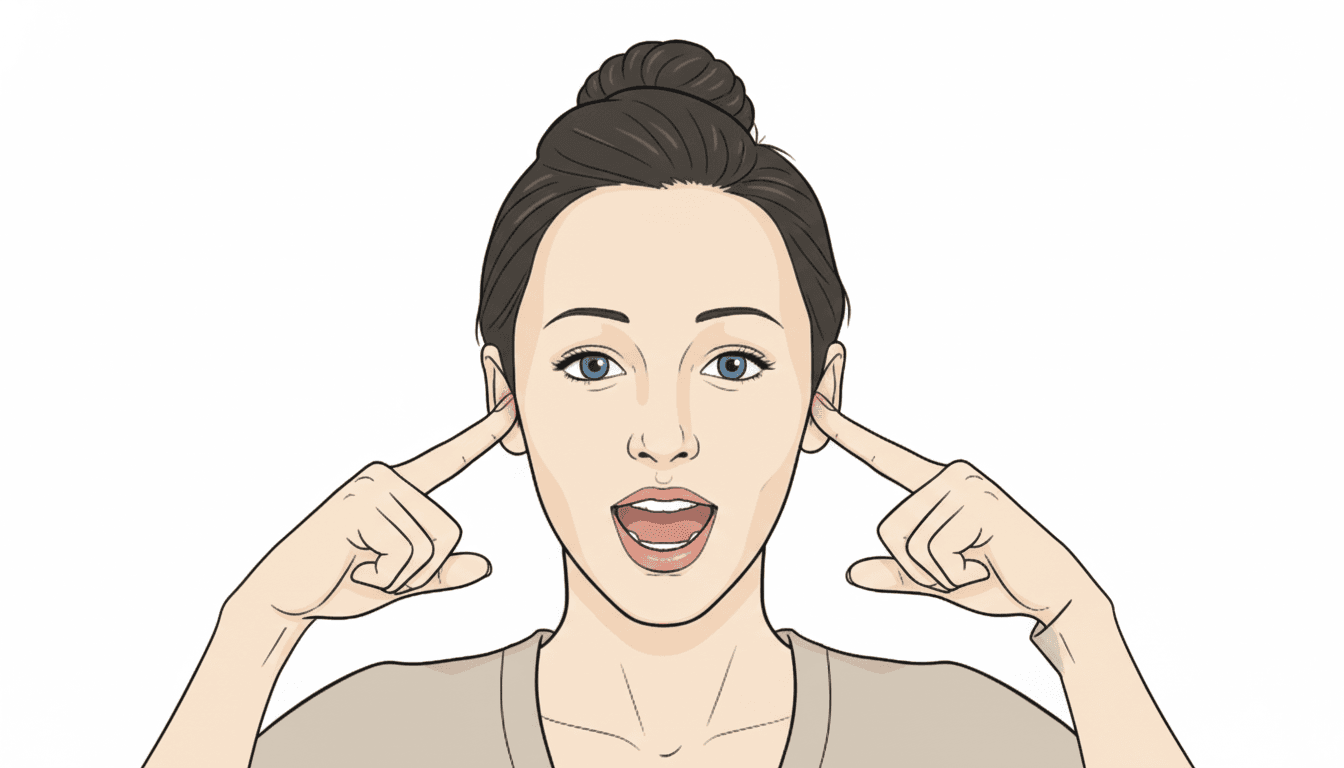
Goldfish Exercise
Place tongue on roof of mouth, fingers on TMJ. Open halfway in a controlled motion. Trains smooth hinge movement and can reduce clicking.
02
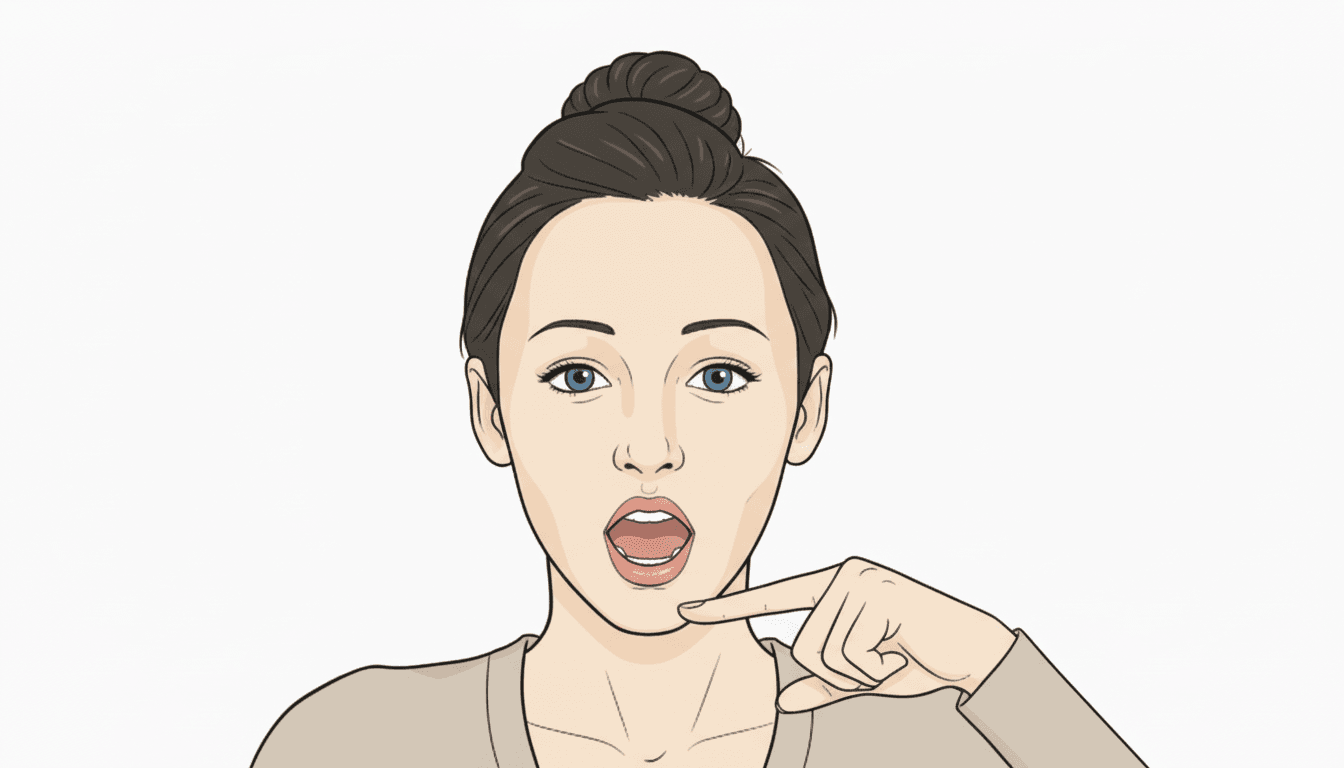
Isometric Jaw Resistance
Place thumb under chin and gently resist as you open. Builds strength in jaw-opening muscles without straining the joint.
03
N-Stretch Coordination
Say 'N' to position tongue, then open slowly while watching in a mirror to ensure straight movement. Corrects lateral deviation.

04
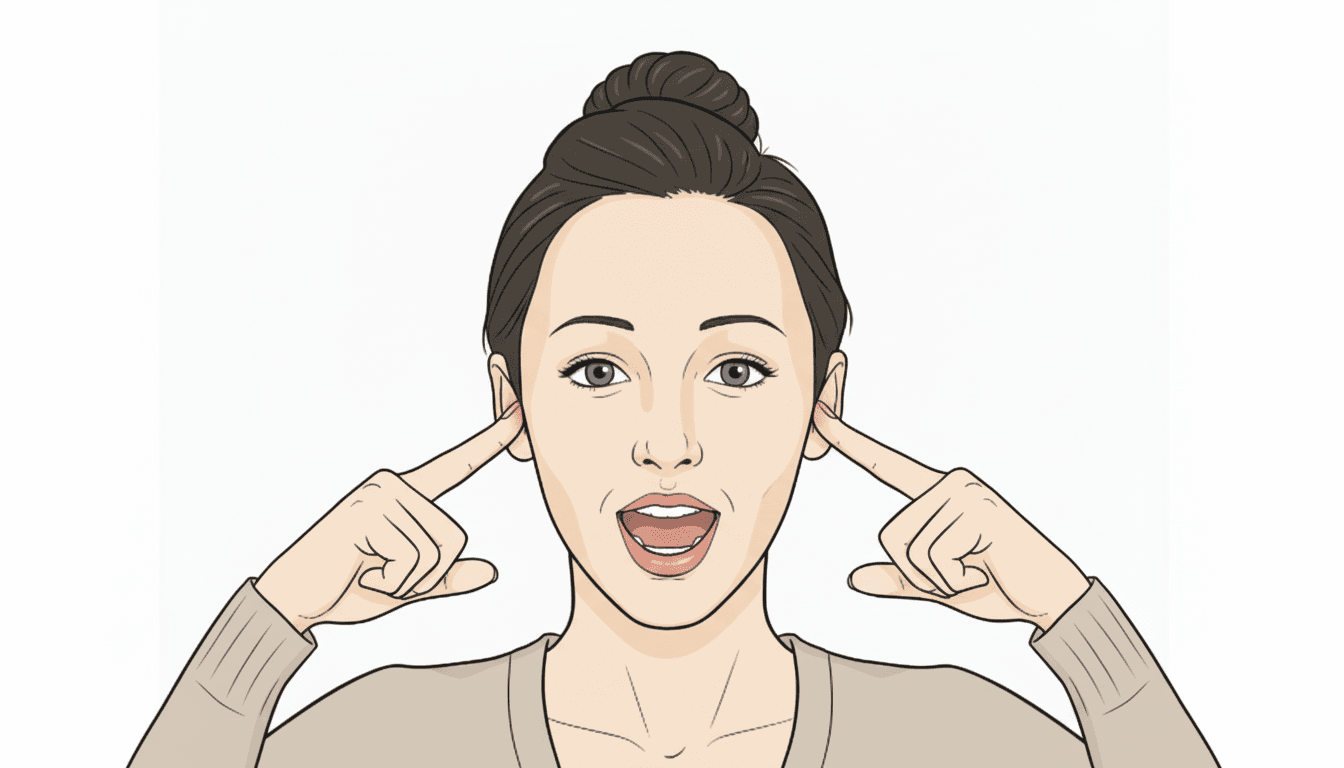
Lateral Jaw Glides
Move jaw smoothly from left to right, holding briefly at each end. Improves lateral mobility and muscle balance.
That's the library in outline. What the app adds is sequencing them sensibly, reminding you, and showing whether anything is shifting — six weeks of consistency is where the evidence lives, and consistency is the part people lose.
When to stop, and who to ask
Exercises are safe for most people and they are not the answer to everything.
- Sharp or increasing pain during a movement — stop, don't work through it
- A jaw that locks, catches or won't open fully
- Swelling, heat, or pain with a fever
- Numbness or pins and needles in the face
- No change at all after six to eight weeks of consistent practice
Any of those is worth a dentist, doctor or physiotherapist. We don't diagnose and this page doesn't replace someone examining you.
The Jaw Behaviour Quiz
Two minutes to a clearer picture of what your jaw is doing.
Fourteen questions about your days, your nights and what you put into them — and a read on where yours points. A starting point, not a diagnosis.


14 questions · about 2 minutes · free, no account needed
Do you wake up with a tired, stiff or sore jaw?
- Most mornings
- Sometimes
- Rarely or never
Get my result
Why JawSense
Six kinds of exercise
Stretching alone is not enough. So there are exercises for mobility, strength, massage and coordination too — all from published protocols.
Backed by






Frequently Asked Questions
How long before jaw exercises do anything?
Can jaw exercises make things worse?
Can exercises realign my jaw?
Do jaw exercises stop clenching?


Related guides
The JawSense app
Not sure where to start?
The JawSense app matches you to a personalised programme based on your symptoms. Each programme sequences exercises appropriately and progresses you over 3-6 weeks.


 Scan to get the app
Free · iOS & Android · works without the device
Or start with the 2-minute jaw quiz
“The check-ins made me realise I was clenching all day at work. Now I catch myself and let go of it. My awareness has completely changed.”