The Night Biofeedback Programme · Cohort 2 · a small group
Train your jaw to let go while you sleep.
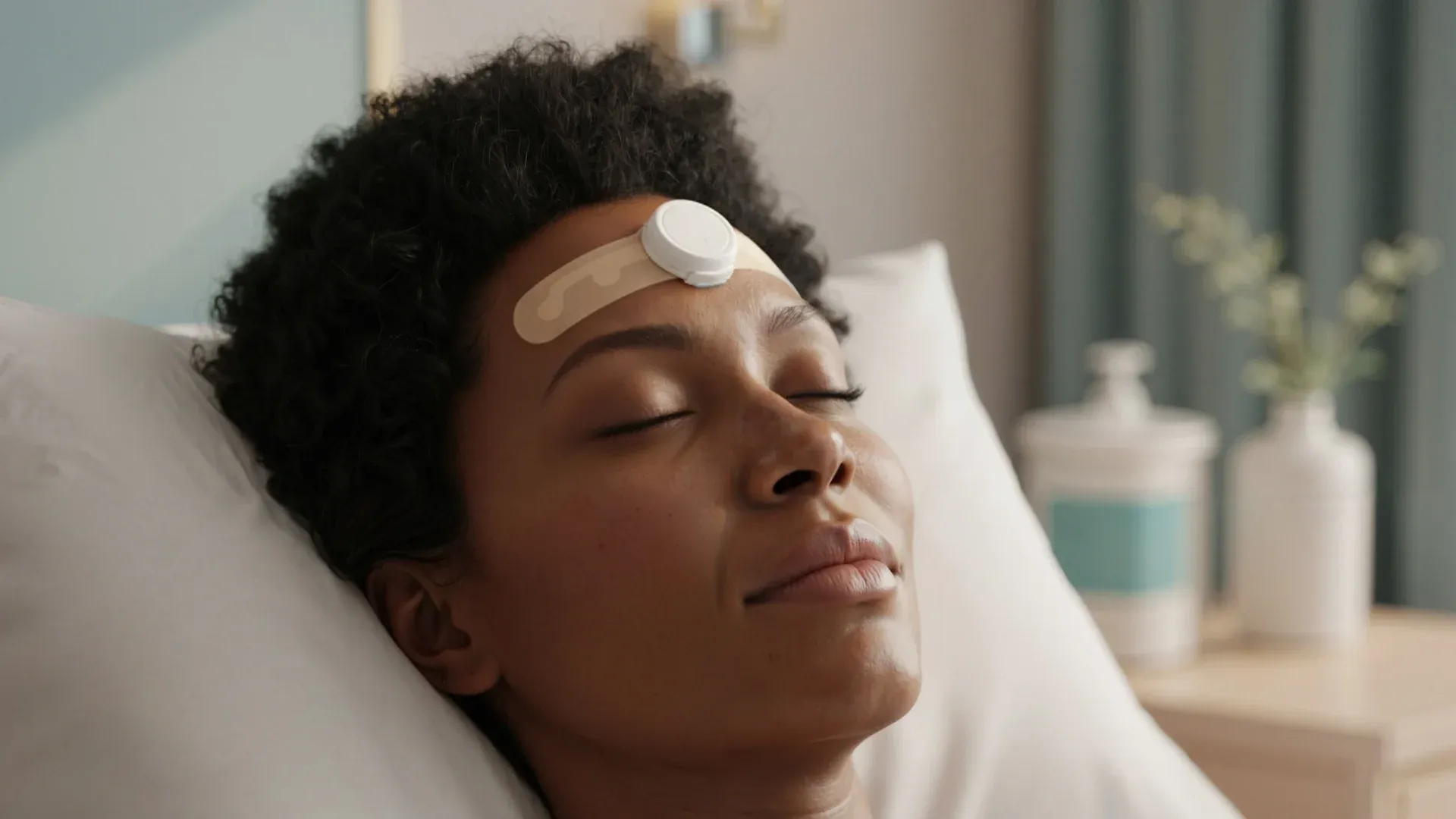
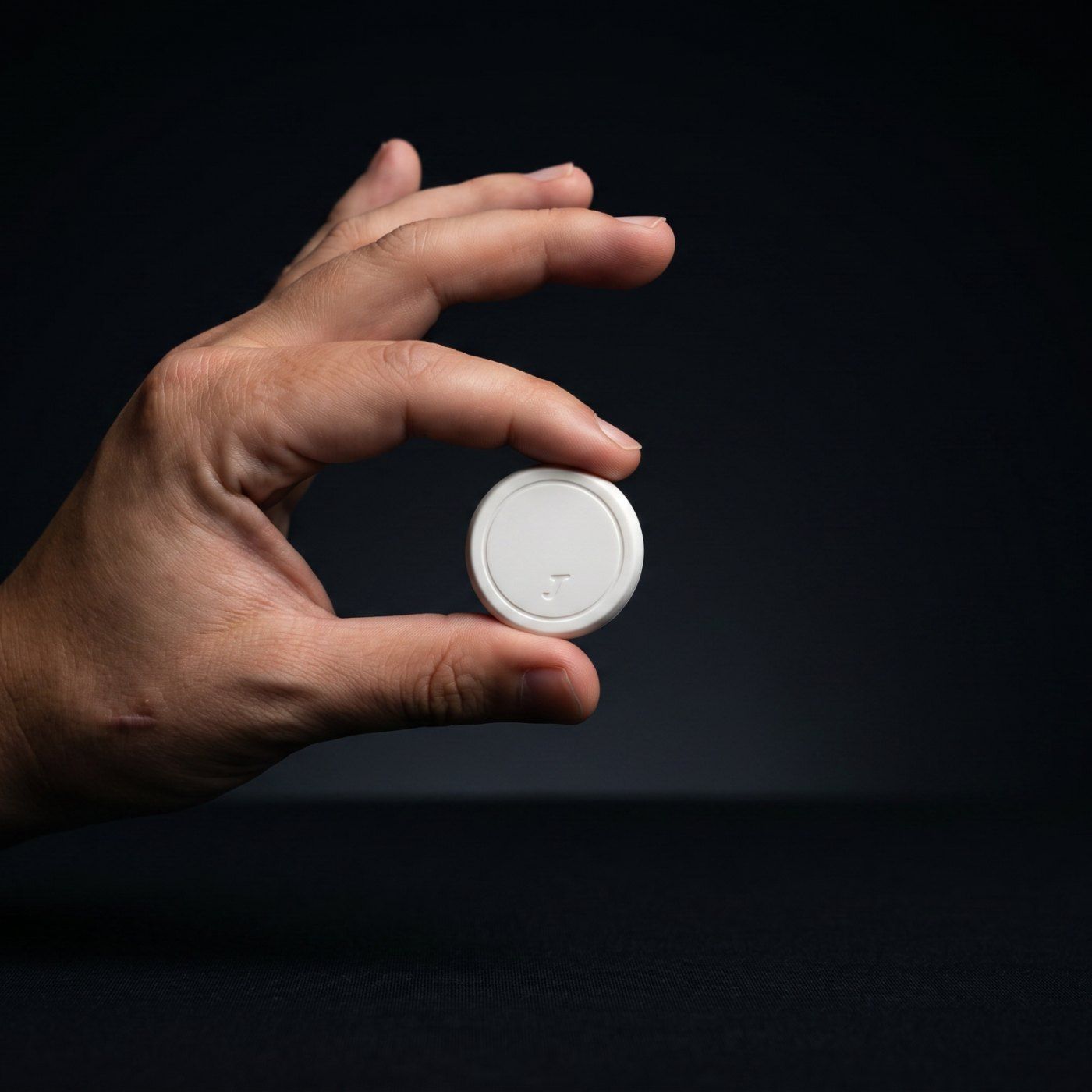
JawSense ONE sits on your forehead while you sleep. Every time your jaw starts working, a small cue prompts it to let go. Most people don't notice it at all, and in the morning the whole night is in the app. We run the programme in small groups while we keep improving the training — join if you'd like to help shape it: try new technology, tell us what works, and see your own data every night.
Cohort 1 is full — join the waitlist for Cohort 2
I don't know if what I feel is a placebo effect, but it seems like my face is much more relaxed and I woke up this morning very relaxed, as if I were very clear-headed.
One of our first users · Exit call · NL
How it runs
What actually happens across the twelve weeks?
Step 1
Start with the Assessment
Two measured nights in your own bed — the before picture your twelve weeks are compared against.

Weeks 1–12
You sleep with the sensor
Not every night — aim for at least four a week; the rest are yours. Enough electrode patches for the whole twelve weeks arrive with the kit.

Every morning
You see what happened
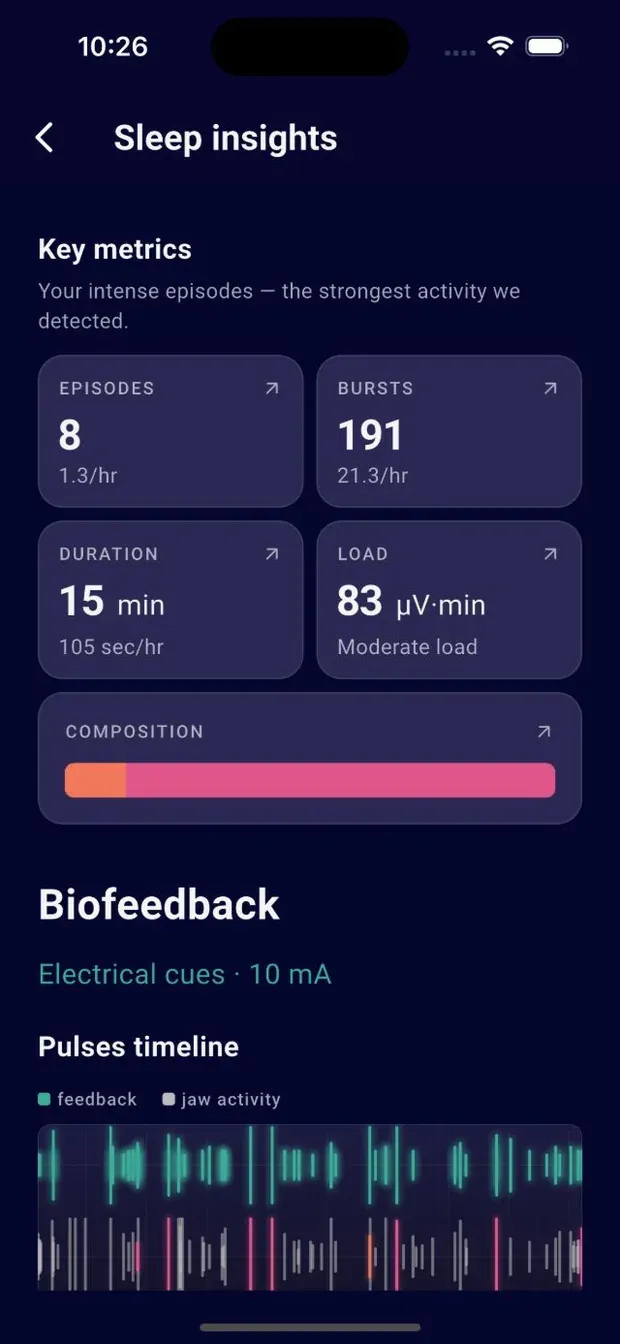
Your jaw activity and your biofeedback data in the app, side by side: the cues delivered, and how well you responded to each one.

Three times
You go through your data with us
Three calls across the twelve weeks: we look at your nights together and pick better settings. Book extra calls whenever you want, and someone answers if anything breaks.
Patch on, sensor on, sleep. The only habit is charging it in the morning.
What you see
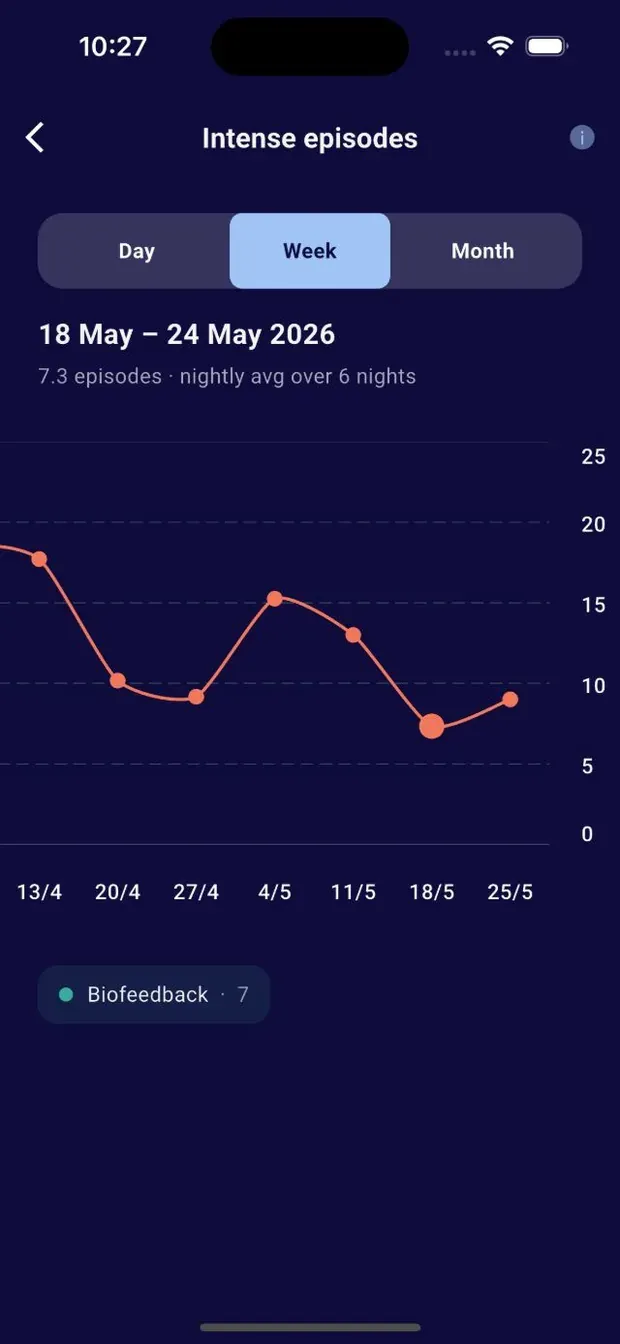
Week by week, you watch your numbers move.
Every morning, last night's numbers are ready and waiting: episodes, bursts, duration and load, with every cue lined up against every jaw episode. Week by week you can see whether the biofeedback is doing anything — change a cue setting and watch what that does.
You keep both reports, written in plain English: your first two nights, and your twelve weeks. Same measurements, so you can put them side by side.
How you get in
Everyone starts by measuring. Two nights, in your own bed.
The cues are set to your jaw, so we need to see it first.
- Your Assessment has to be less than eight weeks old on the day the programme starts.
2,600+ on the list
Before you apply
Who we turn away.
If your baseline comes back quiet
We say so before the cue weeks begin, and we talk it through with you: does carrying on still make sense?
If your skin won't take an adhesive for twelve weeks
Two nights of the Assessment answer that before you commit to twelve weeks.
If what you need is to get rid of pain
We are a wellness company, not a clinic. Jaw pain is a conversation with a clinician, and we will tell you that.
If you need the outcome guaranteed
We don't yet know whether the change lasts after the cues stop — that's still an open question in the research. The programme is built to find that out for you, not to promise you an outcome.
And if it does nothing for you, you will be the first to know.
Every night is measured, so a programme that changes nothing shows up as a flat line on your own chart.
Verbatim, from the exit calls
What Cohort 1 said.
10 of 10 spent less time in severe jaw activity on the night they were cued than on their own baseline night.
Ten people in our first cohort recorded a baseline night and a cued night we could compare directly. One night each, so we call it an early signal rather than proof.
How we measured it“It felt like someone lightly pulling the hairs above your forehead.”
One of our first users · on the night cue
“I was really surprised how easy it all was. It didn't bother me while sleeping.”
One of our first users · NL
“I don't think there's anything on the market that addresses this problem… I'm not giving a 10 because the system has to prove itself over the longer term.”
One of our first users · NL
Pricing
One price, everything included.
The Night Biofeedback Programme
€897 · or 3 × €299
That's about €75 a week.
Twelve weeks of biofeedback tuned to your own jaw, in your own bed — every night measured on the same scale as your baseline.
Device on loan · your Assessment is the baseline · no subscription
What's included
The measurement
- You find out what your own jaw does at nightyour own numbers, every night of the twelve weeks, and we go through them with you
- Your Assessment is the baselinethe before picture — you don't pay to measure twice
- An end-of-programme report against your baseline
- Both plain-language reportsyours to keep, in plain language
The retraining
- JawSense ONE on loan for all twelve weeks
- Night-time biofeedback, personalised to your own jaw
- Electrode patches for all twelve weeks
The humans
- A setup call to get your cues right
- Three calls across the twelve weeks to go through your nights
- A direct line to the team
The safety nets
- Free re-record if a night fails to record
- Free cancellation up to a week before you start
- A quiet result is reported as a quiet resultwith what's worth doing instead
The device is a loan, not a purchase. That's why twelve measured, coached weeks cost €897 instead of what it would cost to own a sensor you'd only need for three months.
The comparison
Ways to spend the next twelve weeks on your jaw
A night guard still protects your enamel, and plenty of people run both. The questions on the left are worth asking of any of them.
| A night guard | Trying things blind | The Night Biofeedback Programme | |
|---|---|---|---|
| Root causeIs anything about the habit itself changing? | No — it protects your teeth while the muscle carries on exactly as before. | Maybe. Nothing was measured, so nobody can say. | That's the entire job: biofeedback at the moment it happens, every night, for twelve weeks. |
| Accurate dataDo you find out whether it worked? | You find out how the guard is wearing. | You find out how you feel — impressions, not numbers. | Every night you wear it, on the same scale as your baseline. |
| What it asks of youWhat do you actually have to do? | Wear it, and remember to. | Keep trying things, and keep not knowing. | Go to bed wearing a patch. Twelve weeks of it. |
| Five years onWhat have you spent, and what do you know? | €800–2,400 in replacements, and as much about your jaw as on day one. | Whatever the last five things cost. Still no baseline. | €897, once, and a before-and-after you can still read. |
| If it doesn't workHow would you find out? | You wouldn't. Wear tells you about teeth, not about muscle. | You wouldn't. That is the trap. | Your own nightly numbers say so plainly. |
A sleep lab is still the most accurate way to measure this — but that means a night away from home, every night, usually with a waiting list. We measure the same muscle group, in your own bed. And a guard isn't competition: one protects your enamel, the other works on the habit. Guard prices are what a custom guard costs, replaced every one to three years.
You are in control
Four things you set yourself, and change whenever you like.
Comfortable is different for everybody, so you set these yourself.
01
Delay before cues start
How long the sensor waits after you go to bed before it cues you at all — so it leaves you alone while you're falling asleep.
02
Sensitivity
How much jaw activity counts as an episode worth cueing. Higher catches more; lower catches only the heavy ones.
03
Cue intensity
How strong the cue is, and there's a limit built into the device that it can never go past. Our first users describe it as a light flick on the forehead.
04
Maximum cues per night
A ceiling, so a busy night cannot turn into a night of being nudged.
Some nights in the programme run with the cues off on purpose. That's how you — and we — see what your jaw does without them.
What Cohort 1 measured
13 of 17
gave the lowest possible score when we asked whether the cues woke them. Nobody gave the highest
17 of 17
finished both nights, sent back both morning forms and did an exit call. Nobody dropped out, nobody skipped a night
Cohort 1 was our first user test: seventeen people, two nights each, in their own beds. Each comparison is one cued night against that person's own baseline night.
How we know what a night is supposed to look like
Our own recordings and lab data, used to build and test how the app scores a night.
30,000+cues
delivered mid-sleep on programme nights so far
200,000+episodes
checked while we built and tested how the app scores a night, including about 10,000 nights measured in labs
3,000+hours
of real jaw-muscle signal recorded on our own wearable
Backed by & built with










Fair questions
Before you apply
The Night Biofeedback Programme · €897
Work on the clenching itself, in your own bed.
Cohort 2 is a small group, and this button puts you on its waitlist. We run the programme in small groups while we keep improving the training, so what you tell us changes it.
cohort 1 is full — the waitlist for cohort 2 is open
Joining the waitlist costs nothing and commits you to nothing
Start with the two-night Assessment
“Finally insight, and a handle to start investigating what specifically helps.”


Not ready for twelve weeks?
Start with the app. It's free.
You don't need the sensor, and you don't need a cohort place. The app is where most people start: guided routines, a symptom and trigger diary, and the release work you can do at your desk today.
- 18 programmes, from check-ins to relaxation and habit change
- A symptom and trigger diary, with summaries you can hand to your dentist
- Built on what the international guidelines for bruxism and TMD recommend you do yourself



The Night Biofeedback Programme
€897 · or 3 × €299