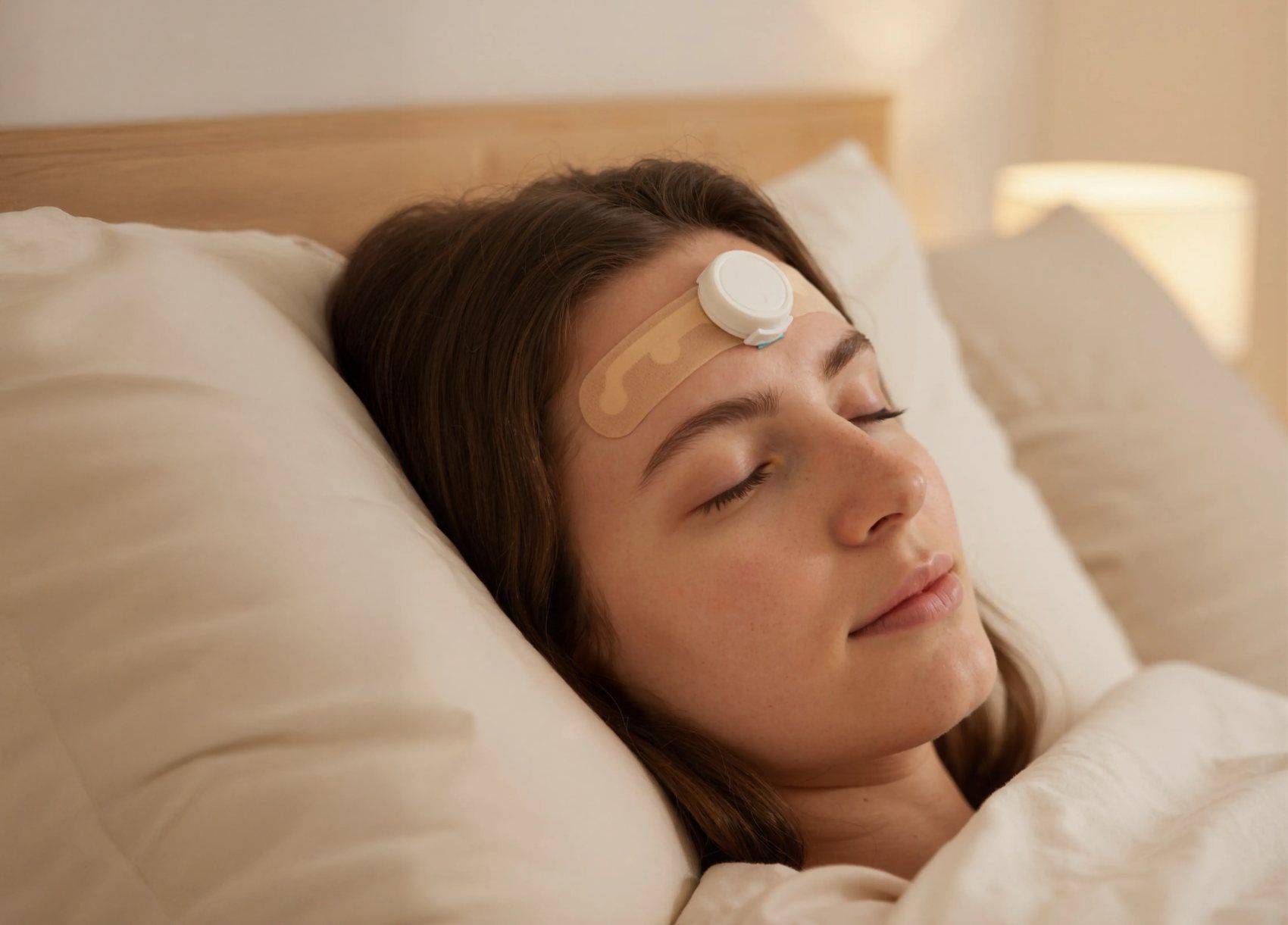
The Jaw Activity Assessment
Do you know what your jaw does while you sleep?
Almost nobody does. Two nights with JawSense ONE in your own bed and you will: how often, how long, how hard, and whether it's grinding or clenching.
Why you can't just guess
How do grinding and clenching go unnoticed for years?
Most of it happens while you're asleep. Unless someone measures, it gets found by accident — or not at all.
1 in 5
2 in 5
adults grind or clench in their sleep, when you ask them
when researchers measure them in a sleep study instead
Same people. The difference is whether anyone measured.
01
Someone hears it
Grinding makes a sound. Clenching is silent. A partner who has never heard anything hasn't ruled anything out.
02
A dentist sees wear
Worn teeth show what happened over years — not what your jaw did last night, or whether it's still happening.
03
You catch yourself
You can catch a daytime clench. You can't catch anything while you're asleep.
How it works
The kit arrives. You sleep two normal nights. The morning after, your results are in the app.
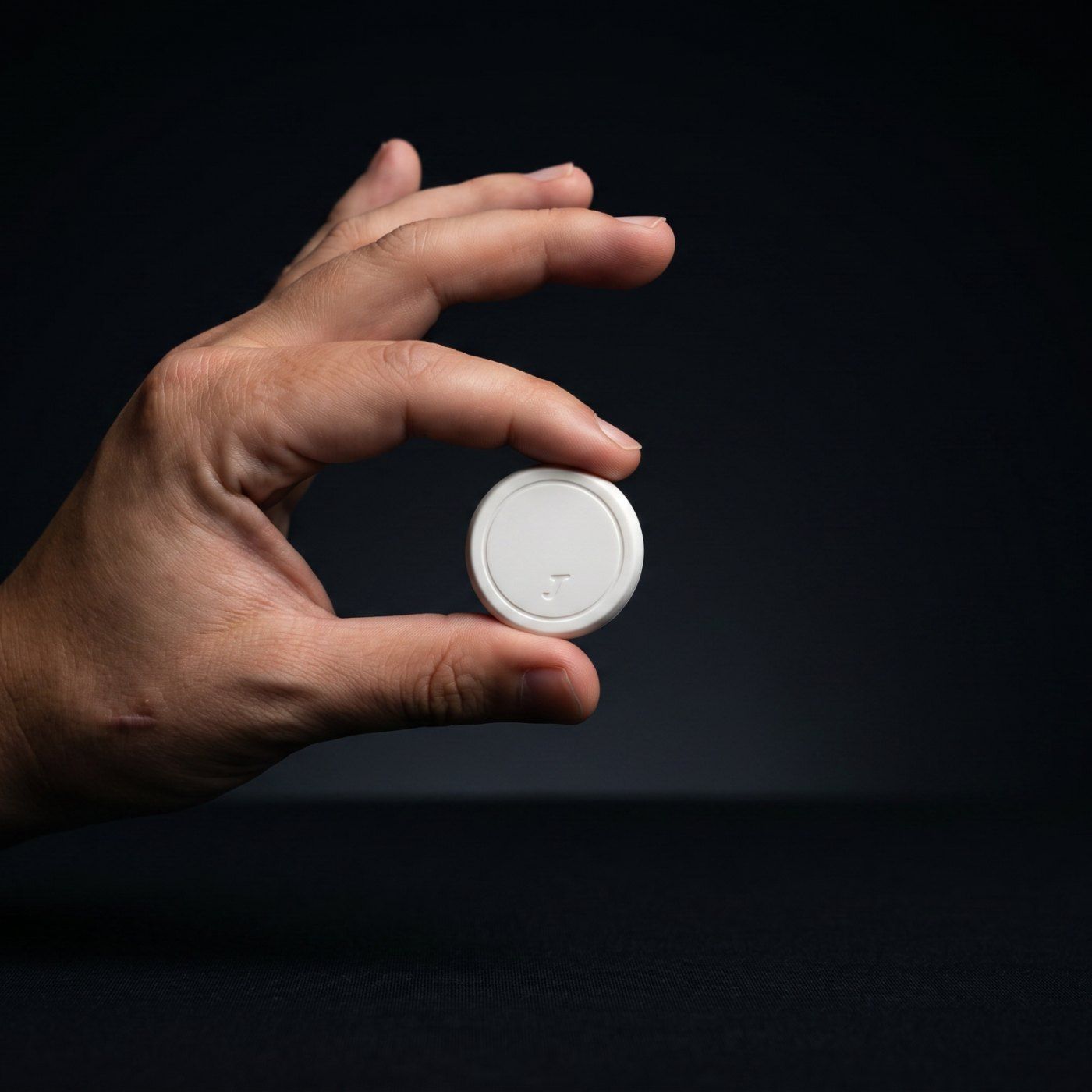
Day 0
The kit arrives
In the box: the JawSense ONE sensor, electrode patches for both nights, a charger, a quick-start card and a prepaid return label. Scan the card with the app and the sensor pairs. Pick any two nights that week.

Nights 1–2
You sleep, it records
Stick a patch on your forehead, click the sensor on, press start in the app, sleep. It records your jaw muscle all night. Two nights, because your jaw doesn't do the same thing every night.
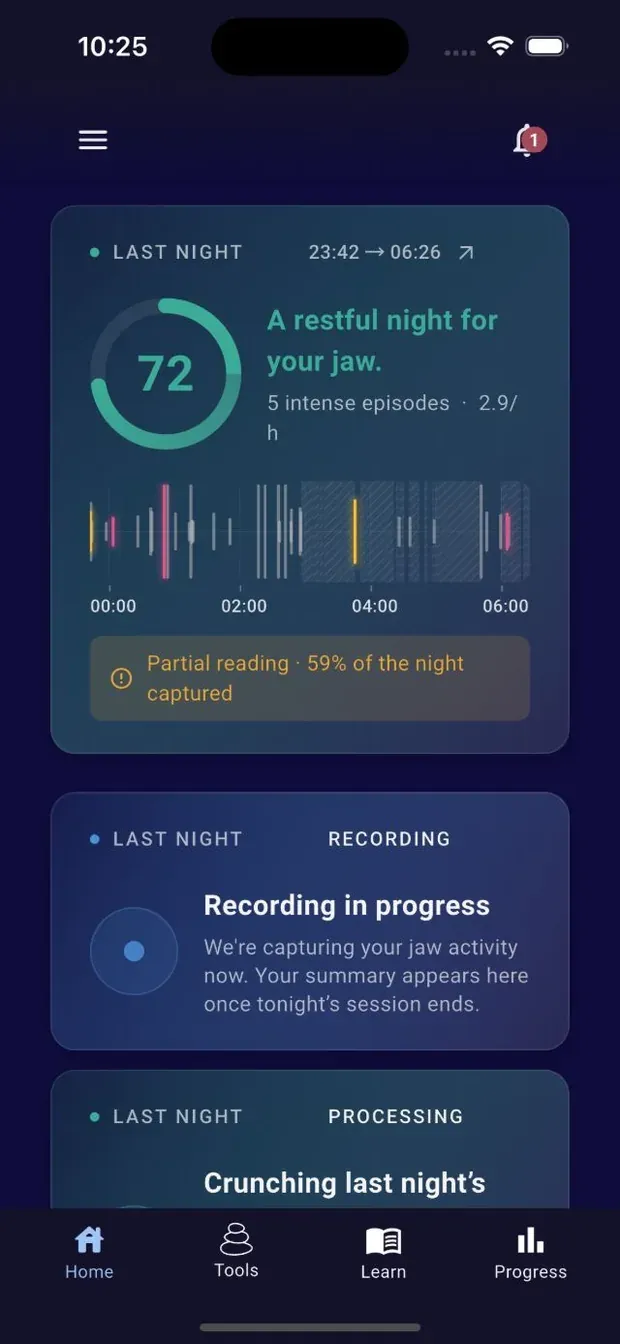
Day 3
Your results
The morning after night two, your results are in the app: your Jaw Score, your Jaw Activity Report, and a one-page summary for your dentist. A 15-minute call, if you want it, to go through them and what to do next. The kit goes back in the post with the label.
What you actually get
Both nights, sorted and scored.
Each night is sorted into what your jaw was doing — grinding, clenching, or both — and scored. In the app the morning after night two, with a one-page summary for your dentist.
Not a diagnosis, not a severity grade, not medical advice. We describe what we measured; anything clinical stays with your dentist or doctor.
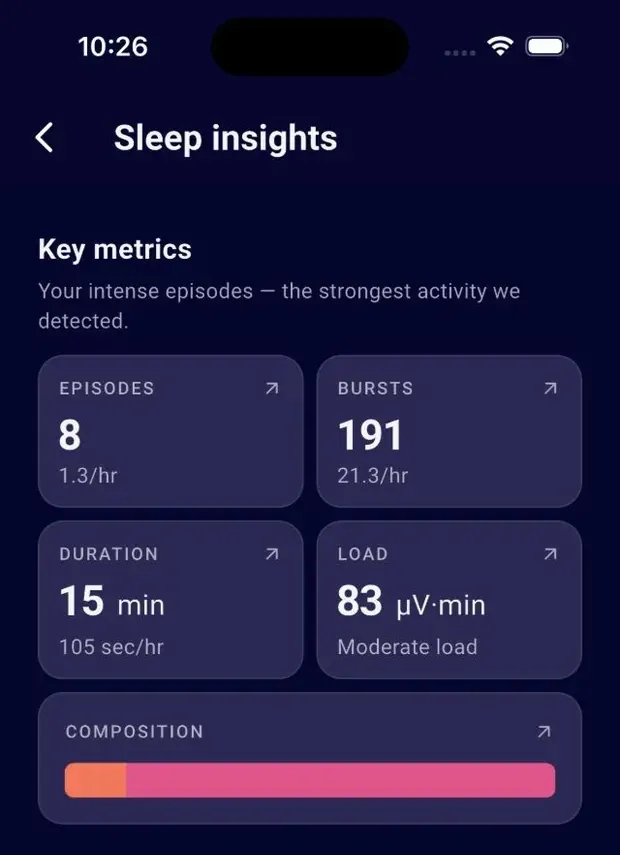
Your Jaw Score
One number for the night, built from three things.
- How oftenevents
- How longduration
- How hardintensity
Counting episodes tells you how many times, and nothing about the load. A short flicker and a long hard clench score the same. Yours doesn't.
What you do with the number
What two measured nights can actually tell you.
A Jaw Score is a number on a range, not a yes or a no. Here's what people decide with it.
Whether biofeedback is worth your time
A lot of activity, and the biofeedback programme has something to work on. Not much, and we tell you so.
Whether it is really your nights
Plenty of people find their jaw is busiest awake. Then the work is daytime work, which the app does for free.
What kind of activity it is
Grinding and clenching respond to different things. The report separates them, so the advice stops being generic.
Whether this belongs with a doctor instead
If the pattern points at your breathing or your sleep rather than your jaw, that's a conversation with a clinician. We say so.
Whether a splint is worth raising with your dentist
A guard doesn't reduce the activity, but if you're loading your teeth hard it protects them. Better decided with a number in your hand.
What to compare against later
Change something — stress, alcohol, a guard, a programme — and two more nights tell you whether it moved.
From the people who've done it
Is it comfortable to sleep in?
First cohort, 2026 · n=17 · self-reported the morning after each night
The cost of not knowing
Our first users had already spent a median of €2,000 each — guessing.
Guards, splints, Botox, physio, specialist visits. Bought for a problem almost none of them had ever seen measured — because outside a sleep lab, nobody could.
Median prior spend, per person
€2,000
Range €620–6,600 across our first 17 users. Estimated from what they told us they had spent, over five years, at Dutch prices.
Pricing
One price, everything included.
Jaw Activity Assessment
€200 one-off
Two nights in your own bed, and then you know.
Kit on loan · prepaid shipping both ways · no subscription
What's included
What you get
- Two measured nights in your own bed
- Your Jaw Score and the full report, in the apphow often, how long, how hard — and whether it's grinding or clenching
- A one-page summary for your dentist or physiothe same numbers, written for their chair — you decide who sees it
- A 15-minute call to go through your results
- A month of JawSense Premiumthe full exercise library and your own analytics
The kit
- JawSense ONE sensor, on loan
- Patches for both nightsbiocompatible silicone, the grade used on babies' skin
- Charger and cables
- Prepaid shipping, both ways
The terms
- One-off. No subscription.
- A clean night, guaranteedif a night doesn't capture cleanly you get another one
- A person on the other end, throughout
- Your data deleted on request
Who it's for
Four reasons people book two nights.
My jaw hurts
Nobody has ever measured it.
Years of painkillers, physio or a splint, without knowing what your jaw does at night.
I'm about to pay for a guard or Botox
Find out first.
Both are aimed at what happens at night. Two nights tell you whether it's happening, and how much.
My sleep tracker shows nothing
It can't.
A ring or a watch doesn't measure a muscle. This does.
My partner grinds
Then you'll both know.
Two nights of numbers instead of a discussion about noise.
The comparison
Three ways to find out. One of them happens in your own bed.
Read down the questions on the left. They're the ones you're actually asking.
| Sleep lab | Guess + guard | Jaw Activity Assessment | |
|---|---|---|---|
| Accurate dataDo you find out what your jaw actually did? | Sometimes — a lab scores sleep, and not every lab scores jaw activity at all. | No. A guard measures nothing. | Yes — the same jaw muscle, two nights, scored by algorithms we built for jaw activity and tested against sleep-lab recordings. |
| More than one nightIs one night enough to tell? | Usually one. Jaw activity swings. | No nights at all. | Two. Jaw activity changes a lot from night to night, so one night can be unusually quiet or unusually bad. |
| What it asks of youWhat do you actually have to do? | Travel, get wired up, sleep somewhere that isn't your bed. | A fitting, then remembering to wear it. | Go to bed. Twice. |
| The waitHow long until you know? | A referral, then a months-long list. | None — that's its appeal. | Pre-register now; results come after your second night. |
| What you payWhat does finding out cost? | €700–2,900 privately. | €400–800 for a guard — not an answer. | €200, once. |
| Five years onAnd five years from now? | One night, scored once, five years out of date — and another lab night to repeat it. | Two or three replacement guards, and the same question you started with. | Still €200. The baseline is what every later measurement is compared against. |
If your dentist recommended a guard, keep wearing it — it does its job well. It just can't tell you what your jaw is doing. And if a clinician suspects sleep apnoea or another sleep disorder, a sleep lab is exactly the right place: we measure jaw behaviour, we don't diagnose. Guard prices are what a custom guard costs, replaced every one to three years.
Backed by & built with









The reasonable questions
Before you book
Jaw Activity Assessment · €200 one-off
Two nights. Then you'll know what your jaw does.
Nothing is bookable yet. Pre-registering costs nothing and commits you to nothing — everyone on the list gets an invite before it opens to the public.
Not sure it's right for you? 2 minutes
“It's so interesting to see how much I'm actually clenching and grinding my teeth. I finally understand why I feel so bad in the morning.”

Available now, free
The JawSense app — your daily companion.
The Assessment is two nights. The app is every day: guided routines, a symptom and trigger diary, and the release work you can do at a desk. It's free, it works without the sensor, and it's where most people start.
- 18 programmes, from check-ins to relaxation and habit change
- A symptom and trigger diary, with summaries you can hand to your dentist
- Built on what the international guidelines for bruxism and TMD recommend you do yourself



Jaw Activity Assessment
€200 one-off