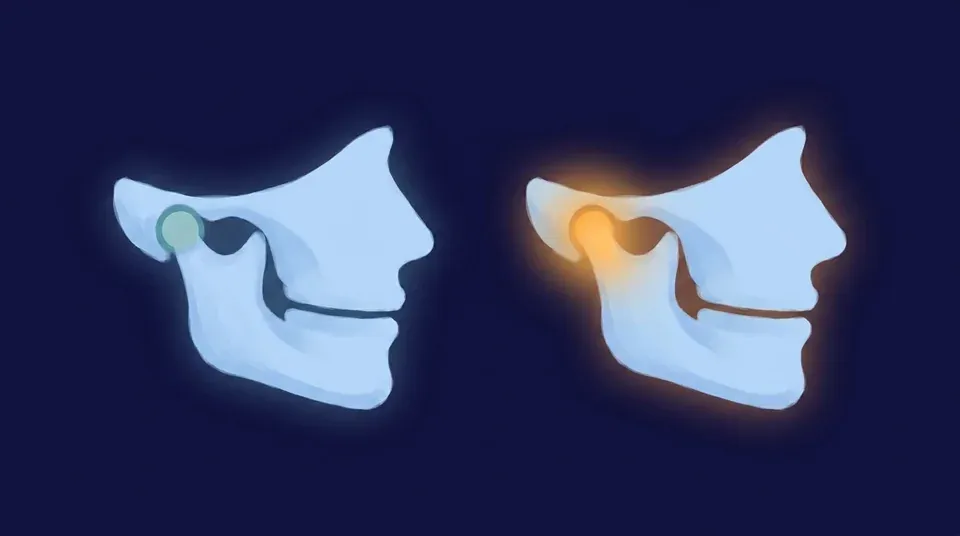
The Confusion Explained
You've probably heard both "TMJ" and "TMD" used interchangeably. Let's clear this up once and for all.
TMJ = The Joint
TMJ stands for Temporomandibular Joint. Everyone has two TMJs — one on each side of their face, just in front of the ears. These are the joints that connect your jawbone to your skull.
TMD = The Disorder
TMD stands for Temporomandibular Disorder (or Dysfunction). This refers to problems affecting the TMJ and/or the muscles that control jaw movement.
Why Does This Matter?
Using the correct terminology helps you:
- Communicate better with healthcare providers — They'll understand exactly what you mean
- Research effectively — Searching for "TMD treatment" yields more relevant results
- Understand the label you've been given — TMD encompasses many different conditions
Types of TMD
TMD is actually an umbrella term covering several conditions:
Muscle Disorders (Myofascial Pain)
- Pain in the muscles that control jaw movement
- Tension and trigger points
- Most common type of TMD
Joint Disorders
- Problems within the joint itself
- Disc displacement
- Arthritis or inflammation
Combined Disorders
- Both muscle and joint involvement
- Often requires comprehensive treatment
Treatment Approaches
The good news: started early, simple reversible care helps most people with jaw problems — roughly 75–90% improve to their own satisfaction.
Self-Management
- Soft diet temporarily
- Heat or ice application
- Jaw exercises and stretches
- Stress management
Professional Treatment
- Physical therapy
- Oral appliances
- In rare cases, surgery
When to Seek Help
See a healthcare provider if you experience:
- Persistent pain lasting more than a few weeks
- Difficulty opening your mouth
- Jaw locking open or closed
- Significant changes in your bite
JawSense has guided self-care for sore, tense jaw muscles and stiff joints — the conservative work you can do at home.