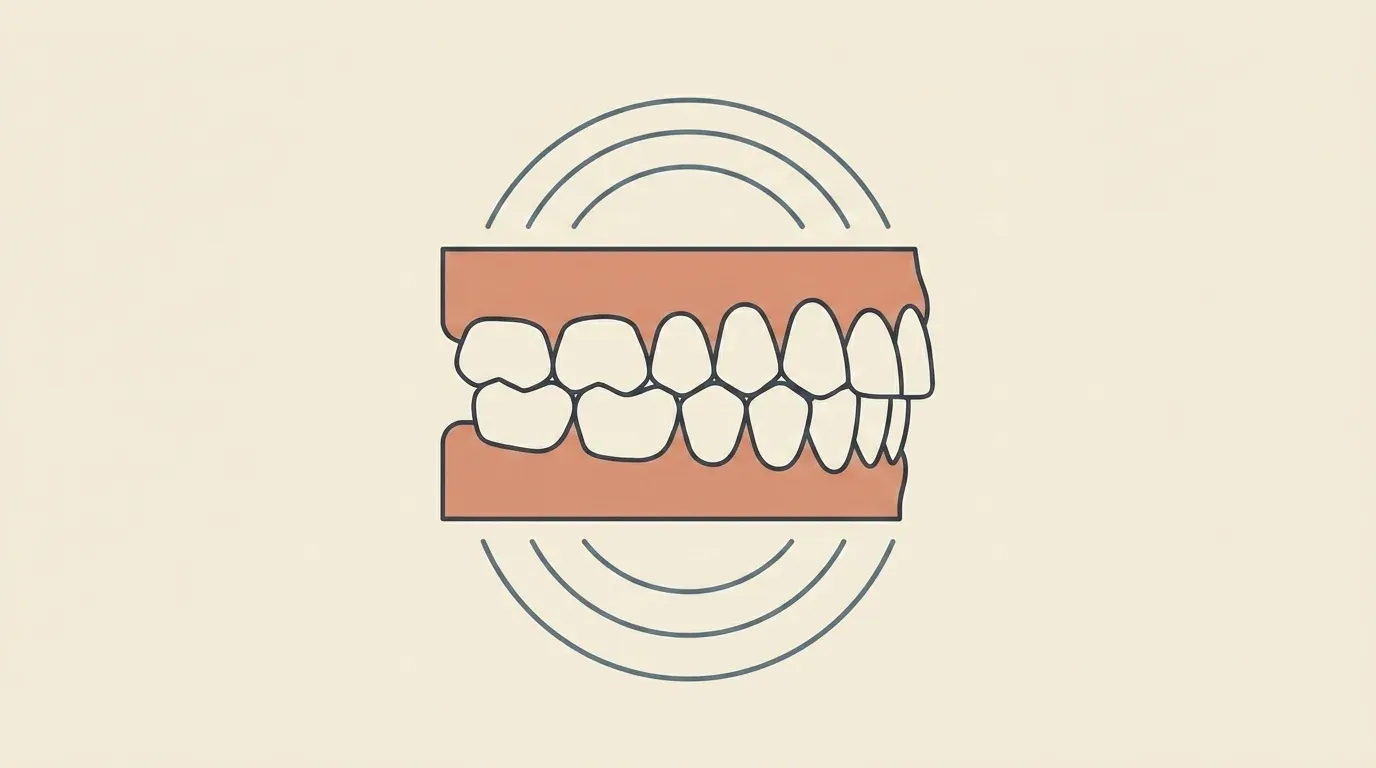
What is Bruxism?
Bruxism is the name for grinding your teeth or clenching your jaw. The people who define these terms call it a motor behaviour rather than a disease — something the body does, not something you have. It's more common than you might think — most estimates put the awake kind at around a fifth to a quarter of adults, and the sleeping kind a little lower, though the figures move a lot with how they were measured.
Two Types of Bruxism
Awake Bruxism occurs during waking hours and is often associated with stress, concentration, or habit. You might catch yourself clenching during a tense meeting or while focusing on a task.
Sleep bruxism happens while you're asleep. It's involuntary, and it often goes unnoticed until something else — wear, soreness, a partner — brings it to your attention.
Common Symptoms
- Jaw pain or soreness, especially in the morning
- Headaches, particularly tension-type headaches
- Worn, flattened, or chipped teeth
- Increased tooth sensitivity
- Tired or tight jaw muscles
- Clicking or popping sounds in the jaw joint
- Ear pain (without an ear infection)
- Disrupted sleep (for you or your partner)
What Causes Bruxism?
The causes are multifactorial and can include:
- Stress and Anxiety — The most commonly cited trigger
- Sleep disorders — sleep apnoea and nighttime grinding commonly occur together; about half of people with obstructive sleep apnoea also grind
- Lifestyle Factors — Caffeine, alcohol, and certain medications
- Malocclusion — Though the relationship is debated in research
- Genetics — Bruxism tends to run in families
What the evidence says works
Conservative Approaches (First-Line)
- Self-management programs — Education, relaxation techniques, habit reversal
- Stress reduction — Mindfulness, cognitive behavioral therapy
- Sleep hygiene — Addressing underlying sleep issues
- Physical therapy — Jaw exercises and stretches
Dental Interventions
- Occlusal splints — Protect teeth but may not reduce grinding
- Dental adjustments — Controversial and generally not recommended
Medical interventions
- Botulinum toxin — Reduces muscle force but not grinding frequency
- Medications — Limited evidence, typically not first-line
The JawSense Approach
We believe in conservative, evidence-based self-management as the foundation of bruxism management. Our app is built on mainstream clinical guidance for conservative self-care, plus research-backed exercises.
Remember: If you're experiencing severe symptoms, always consult a healthcare professional.